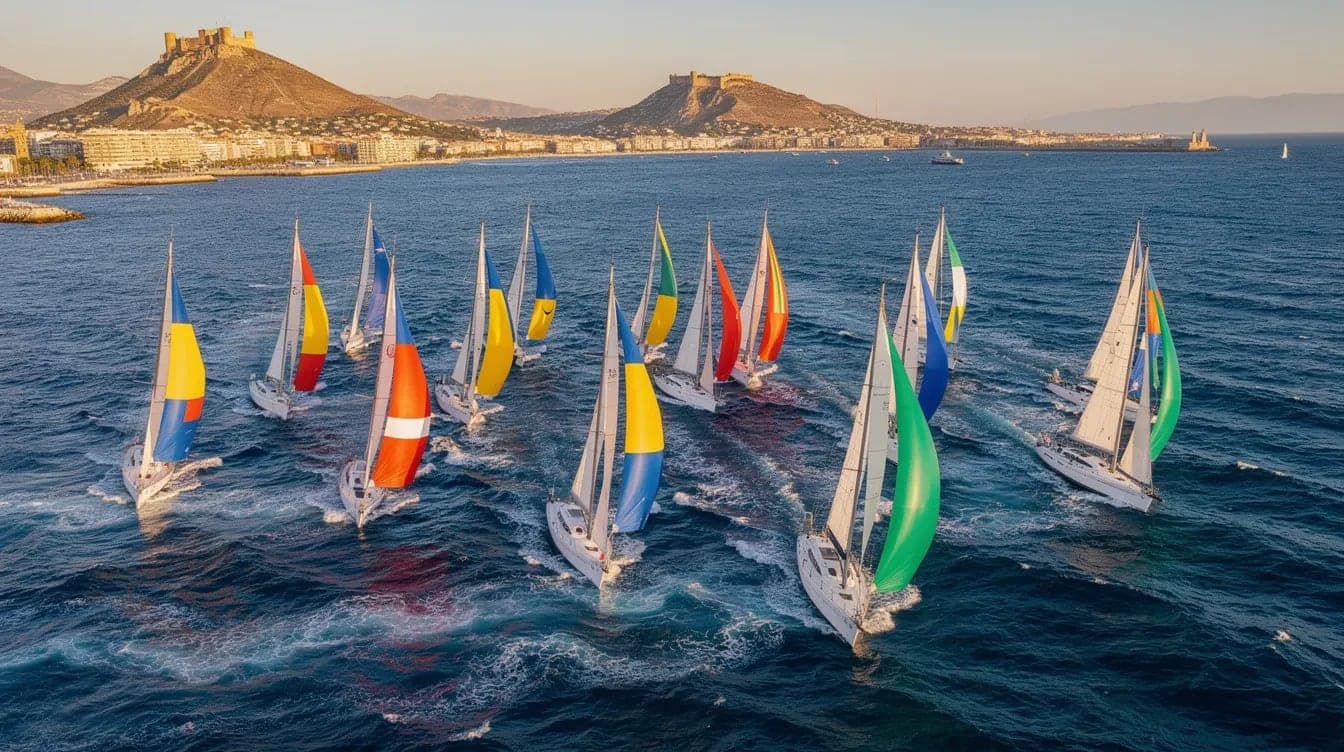
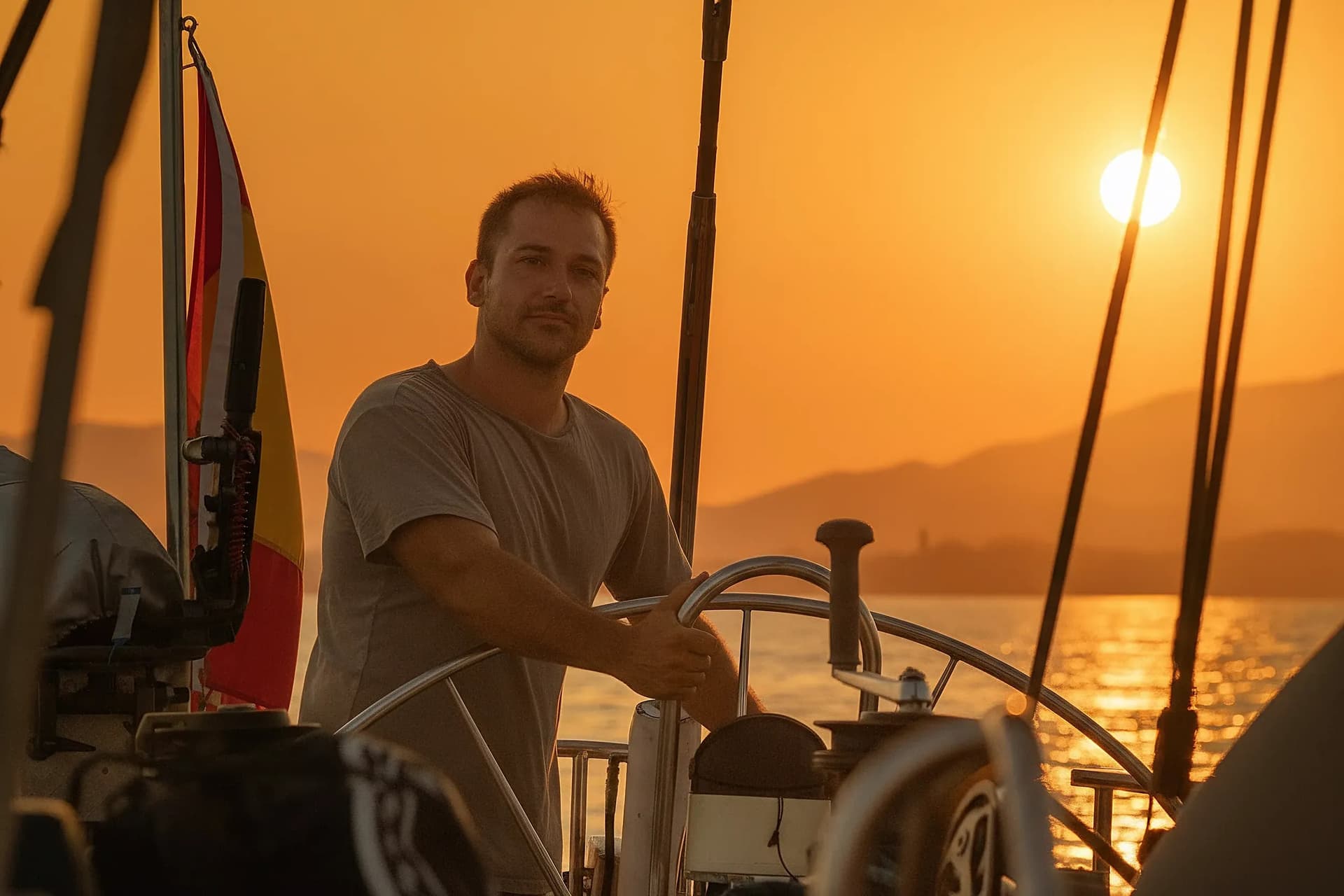
The Trofeo 2 ISLAS A2, one of the most demanding cruiser races on the Real Club de Regatas de Alicante (RCRA) calendar, took place this weekend with a course of approximately 60 nautical miles along the Costa Blanca. The race tested the skill and endurance of crews in conditions marked by wind instability — a factor that turned the regatta into a first-class tactical challenge.
A 60-mile course between two islands
The Trofeo 2 ISLAS A2 takes its name from the shape of its course: a cruiser route linking the two most iconic islands off the Alicante coast, starting and finishing from the RCRA harbour. At 60 nautical miles, it is one of the longest races held in these waters — far beyond the usual coastal regattas.
This kind of distance forces crews to plan every leg with precision: managing crew rotations, anticipating wind shifts and pushing the boat to its limits for hours on end. This is no sprint race — it is an endurance test where consistency and strategy weigh as heavily as raw speed.
Unstable wind: the real protagonist
If there was one thing that defined this year's edition, it was the weather. Wind conditions were especially fickle: intermittent gusts, unexpected direction changes and patches of calm that reshuffled the leaderboard.
In long races like this one, unstable wind completely changes the game. Boats leading the fleet can lose their advantage in minutes if the wind shifts and favours the chasers. Tactical decisions — when to tack, which side of the course to choose, when to risk hoisting a spinnaker — multiply when there is no clear wind pattern.
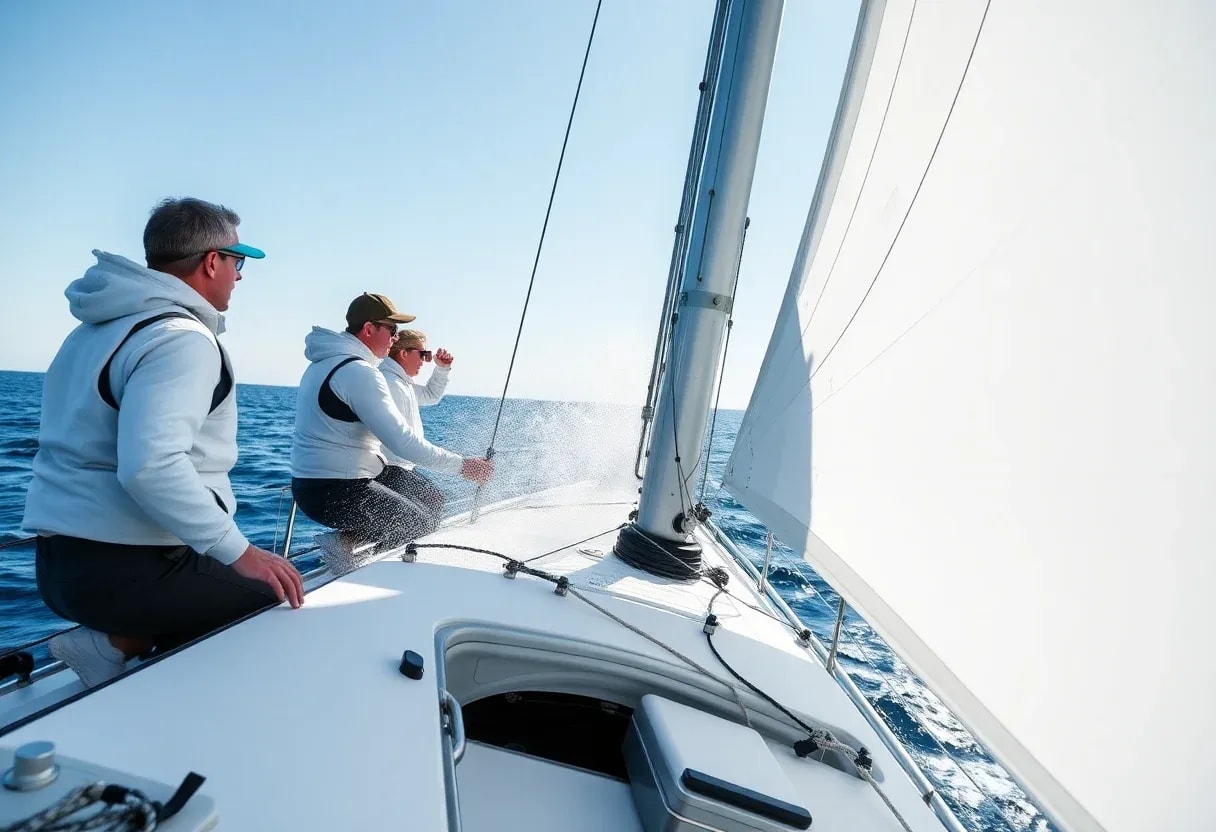
For the crews, these are the most mentally demanding conditions. It is not just about sailing fast — it is about reading the water, spotting pressure lines on the sea surface and making split-second decisions that can be worth entire positions in the standings.
The RCRA: epicentre of cruiser sailing in the Mediterranean
The Real Club de Regatas de Alicante, founded in 1889, is much more than the organiser of the Trofeo 2 ISLAS. It is the engine behind the Costa Blanca's racing calendar and one of the oldest yacht clubs in Spain.
Its flagship event, the TabarcaVela Diputación de Alicante, is recognised as a High-Level Regatta by the Royal Spanish Sailing Federation and sits alongside the Copa del Rey and the Trofeo SM La Reina as one of the three major cruiser sailing events in the country. But beyond that headline event, the RCRA maintains an active calendar all year round with races like the Trofeo 2 ISLAS, training regattas and events for every category — from offshore cruisers to youth dinghy classes.
This density of activity makes Alicante a reference destination for sailing enthusiasts, whether they race or simply enjoy the sea.
What is a cruiser race and why should you care?
If you have never followed a cruiser regatta, it might seem like a distant sport. But the truth is these competitions have far more in common with the experience of sailing a yacht than you might think.
The boats competing in races like the Trofeo 2 ISLAS are not inaccessible racing machines — they are cruiser sailboats, many of them similar to the kind of vessels you can charter for a day out with friends or family in Alicante. The difference lies in the crew, the preparation and the competitive intensity.
Following a regatta — or watching one from the sea — is an inspiring way to understand what makes sailing so special:
- Reading the wind: how crews interpret invisible signals to make decisions
- Teamwork: every manoeuvre requires perfect coordination between several crew members
- Risk management: when to gamble on a sail change and when to play it safe
- The human factor: in a long race, fatigue, nutrition and crew morale matter as much as the boat itself
Experiencing sailing in Alicante without competing
You do not need to be a racer to enjoy the same waters where these events take place. Alicante offers exceptional conditions for sailing at any time of year:
- More than 300 days of sunshine and mild temperatures almost year-round
- Sheltered waters in the bay, with moderate swell ideal for novice sailors
- Coves and destinations less than an hour away: Tabarca, Cabo de las Huertas, Playa de San Juan, Cala de la Almadraba
- World-class infrastructure: the RCRA, the marina and multiple charter options
A sailboat outing with a professional skipper is the most direct way to experience what the Trofeo 2 ISLAS crews live at a competitive level — the feel of the wind in the sails, the silence when the engine cuts, the Alicante coastline seen from the sea. Everything is included: drinks, paddle surf, snorkelling gear and the skipper's expertise adapting the route to the day's conditions.
Options range from a half-day of 4 hours perfect for a first taste, to full-day trips of 8–11 hours that include sailing to Tabarca Island with a stop for lunch at a local restaurant.
The calendar ahead: races to watch in 2026
The Trofeo 2 ISLAS A2 is just one date on the Alicante sailing calendar. If this race has piqued your curiosity, here are the next events to keep on your radar:
- TabarcaVela Diputación de Alicante (July 2026) — the crown jewel, 3 days of racing with the Tabarca round as the showpiece event
- RCRA training regattas — regular short races open to members and guest crews
- Youth dinghy trophies — the RCRA nurtures an active pipeline of young sailors
You can follow the full calendar on the RCRA website and, if you want to experience it from the water, there is always the option of chartering a sailboat and watching the races from the front row — at a safe distance, of course.
Conclusion
The Trofeo 2 ISLAS A2 has proved once again that Alicante is much more than beaches and terraces. It is a city of the sea, with a living regatta tradition and a calendar that never stops. Whether you are racing with an experienced crew or sailing with your family on a Saturday morning, the waters of the Costa Blanca are waiting.
If this weekend's wind tested the best, imagine what it could do for your weekend.