Responsible anchoring on the Costa Blanca in summer: how to choose a safe spot without damaging the seabed
Dropping anchor in a quiet cove is one of the best parts of a boat day on the Costa Blanca. In summer, it is also one of the moments when the seabed can suffer most if the manoeuvre is improvised. The usual problem is not bad intention: it is failing to tell sand, rock and seagrass apart, or letting the chain sweep across a sensitive bottom as the boat swings.
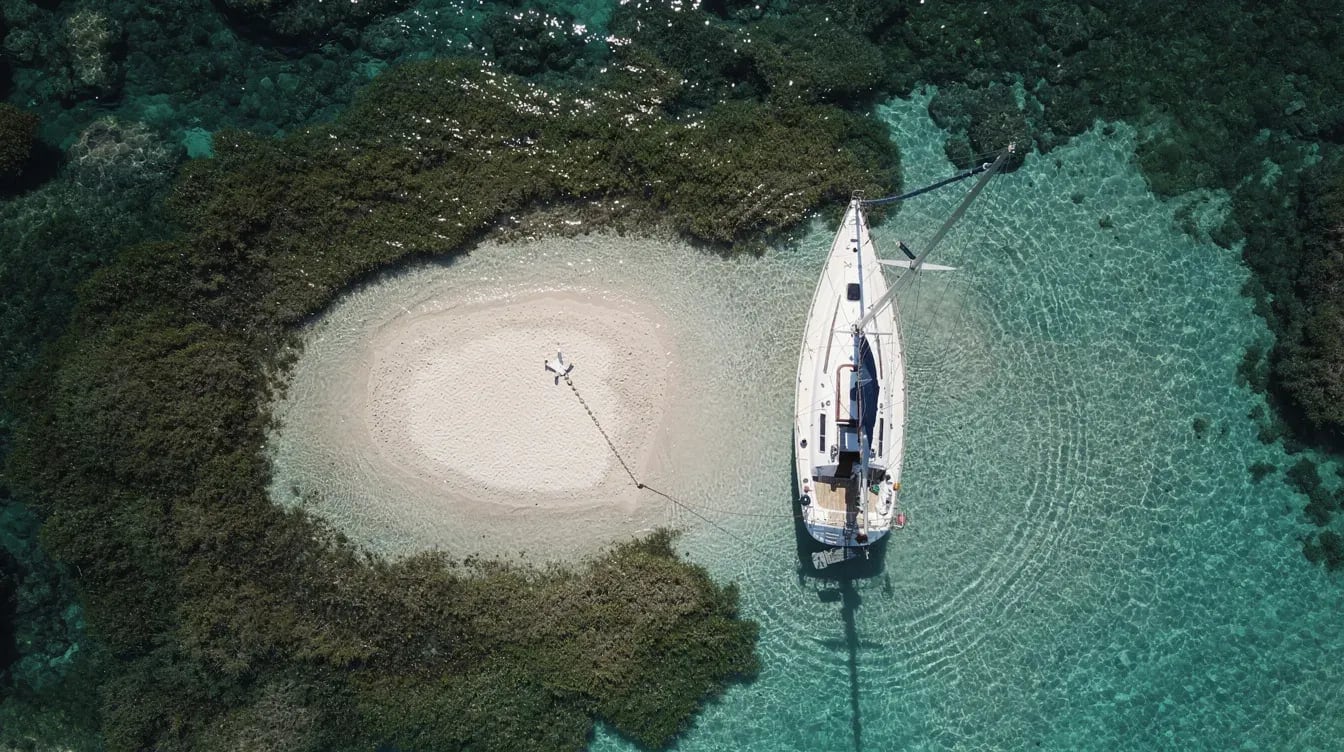
This guide explains how to practise responsible anchoring on the Costa Blanca during the busiest nautical months, with practical criteria for outings from Alicante, Cabo de las Huertas, Tabarca, Campello, Villajoyosa, Altea, Calpe, Moraira and Javea. The basic rule is simple: anchor only on clear sand, never on Posidonia or sensitive seabeds.
Verification note, 19 June 2026: this guide was reviewed against the public sources listed at the end of the article. Local buoy fields, temporary restrictions, weather and sea state can change, so the final decision before anchoring must be checked with updated charts, official notices and the skipper's judgement. For route planning context, compare this with our guides to anchorages and coves in Alicante, short boat trips in Alicante and June winds in Alicante.
Editorial review: this article is reviewed for Barcos de Alquiler Alicante by Carlos C Blasco, professional skipper and local nautical operator in Alicante. It is written as practical guidance for private boat outings on the Costa Blanca, not as a substitute for official nautical charts, harbour authority instructions, weather warnings or the skipper's decision on the day.
Why responsible anchoring matters in summer
In July and August there are more boats, more swimmers, more heat and more pressure to get close to coves with clear water. Those clear waters often exist because healthy ecosystems surround them: Posidonia oceanica meadows, living rocky bottoms and nursery areas for fish.
Posidonia is not an algae. It is a Mediterranean marine plant that oxygenates the water, holds sediment, softens beach erosion and creates shelter for many species. When an anchor lands on a meadow it can tear out shoots; when the chain drags, it can leave scars that remain visible for a long time.
Anchoring is therefore not just "stopping the boat". It is an environmental and safety manoeuvre. A good anchorage protects the bottom, reduces conflict with other boats and lets the skipper lift the anchor without dragging half the seabed with it.
What the rules say about Posidonia and anchoring
The Valencian Community already had specific protection for Posidonia through Decree 64/2022. In addition, Royal Decree 191/2026 of 11 March created a Spanish national framework to conserve Posidonia oceanica and Cymodocea nodosa meadows in the Spanish Mediterranean. Its main lines include reducing pressure on seagrass meadows, regulating anchoring and encouraging low-impact mooring systems.
Translated into an onboard decision: if there is a Posidonia meadow, do not drop an anchor on it. If an area has authorised buoys or a regulated mooring field, use those buoys and follow their conditions. If you cannot clearly identify the bottom, do not drop the anchor until you have checked it.
Do not rely on a fixed mental list of "allowed coves" learned once and forgotten. Restrictions, buoyage, mooring fields and maps can change by season, storm damage, works, environmental studies or administrative decisions. Before a private outing, check updated charts and ask the skipper or charter company.
Operational checks before departure
For an actual summer anchorage, verify these resources on the day of departure:
| Check | What to confirm | Why it matters |
|---|---|---|
| Official weather warnings | Wind, gusts, heat warnings and sudden changes | A calm morning anchorage can become uncomfortable in the afternoon |
| Sea state forecast | Swell direction, short chop and visibility | Holding and safe swimming depend on more than wind alone |
| Updated nautical chart or navigation app | Depth, rocks, channels, buoyed areas and protected bottoms | The article gives criteria; charts give current local detail |
| Local notices and buoy fields | Temporary restrictions, authorised buoys and bathing zones | Summer restrictions can change by area and season |
The article deliberately avoids publishing fixed coordinates or a static list of permitted coves because those details can become outdated. Treat each area below as a risk profile and verify the exact point before dropping anchor.
How to tell sand, Posidonia and rock from the boat
On days with good visibility, the seabed usually gives clear clues:
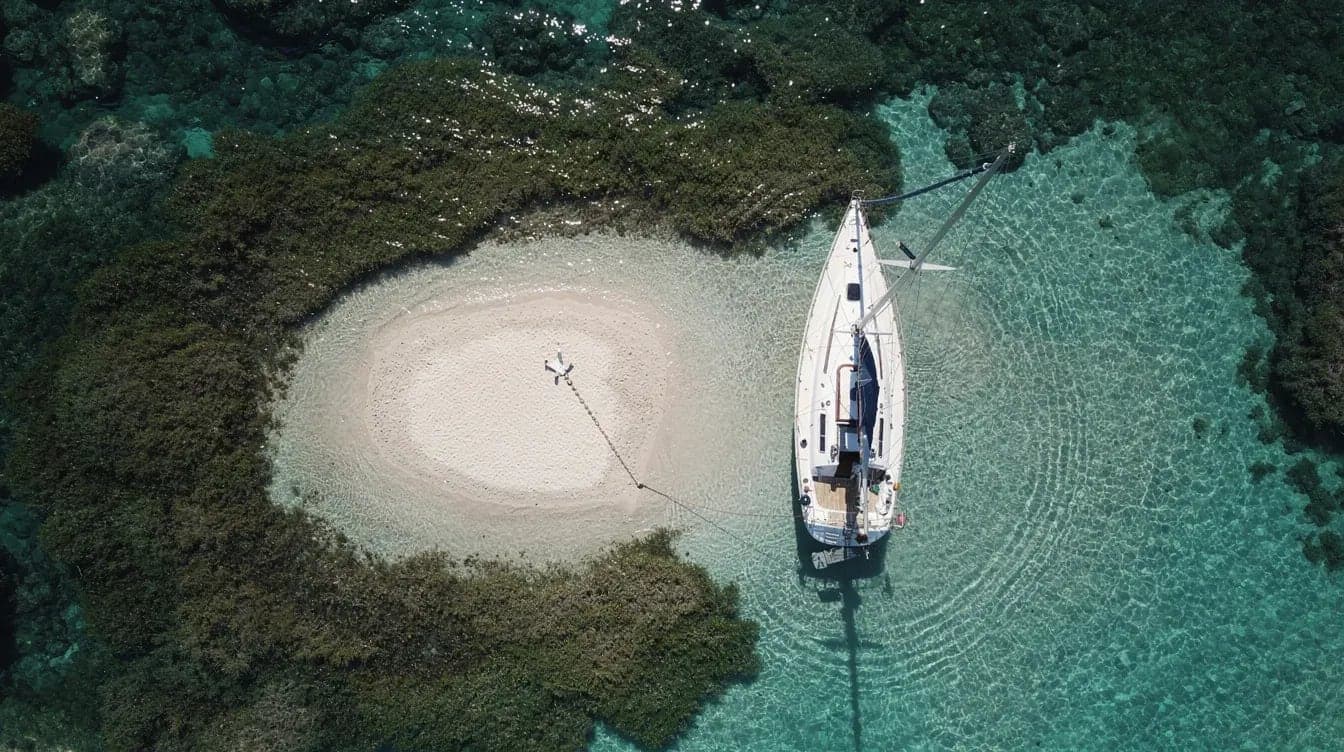
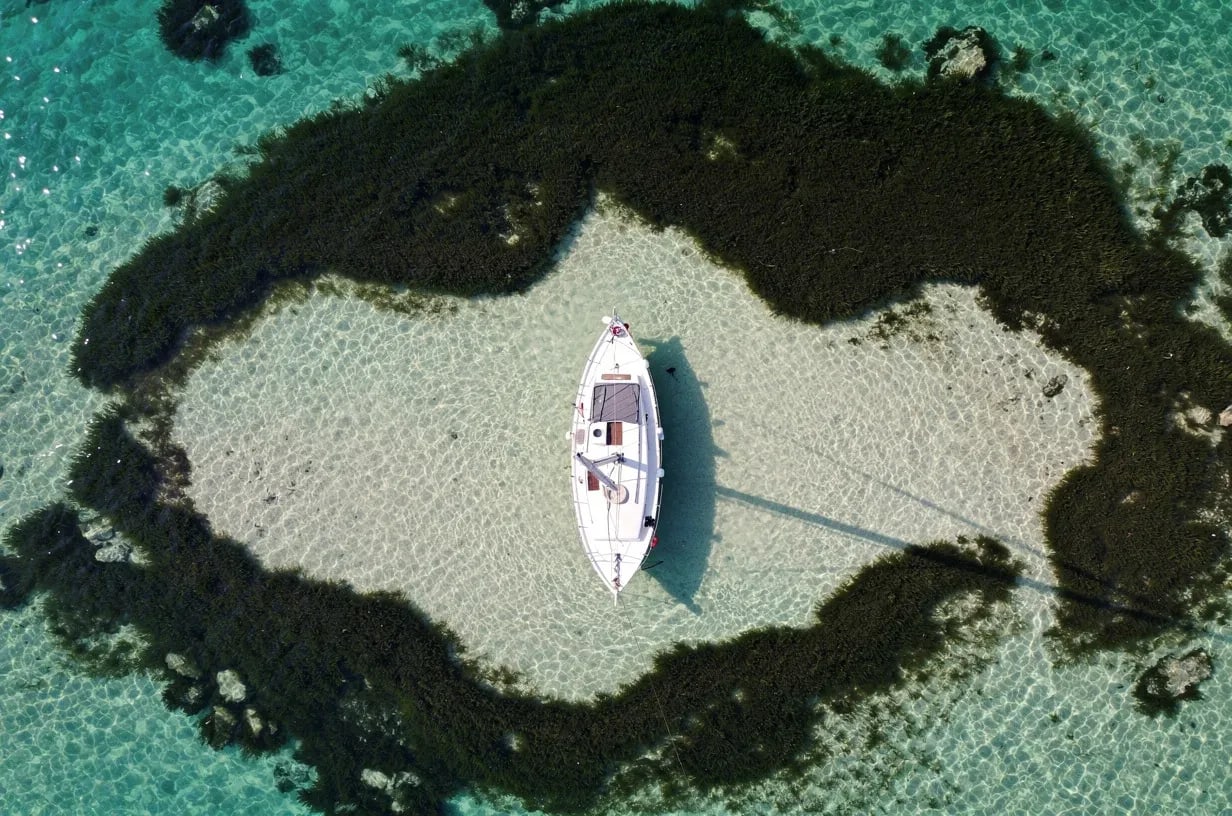
- Sand: pale beige or turquoise patches with a uniform texture. This is the preferred anchoring bottom.
- Posidonia: dark green or brownish patches, often irregular. Neither anchor nor chain should touch it.
- Rock: darker areas or sudden changes in texture. It can trap the anchor and may also host sensitive marine life.
- Mixed bottom: alternating patches of sand and vegetation. It is only suitable if anchor and chain can stay inside a large enough sandy patch.
Turquoise water can mislead you in summer. A beautiful cove is not always an easy anchorage. If the sandy patch is small and the boat will swing, the chain may end up on Posidonia even if the anchor initially landed on sand.
The right manoeuvre: look, measure and lower slowly
A responsible anchorage starts before the anchor touches the water:
- Slow down when entering the area.
- Observe the bottom with high sun or polarised sunglasses if possible.
- Check depth, wind, current, swell and room around other boats.
- Calculate the swinging radius: the boat will rotate around the anchor if the wind shifts.
- Lower the anchor on sand, not on the edge of a meadow.
- Pay out enough chain for the anchor to work, without invading sensitive seabeds.
- Reverse gently to check holding without dragging.
- Recheck regularly that you are not moving toward swimmers, rocks, buoys or other boats.
Rushing is a bad adviser. If the first attempt is not right, lift and repeat. Two clean attempts are better than staying in a doubtful spot because everyone is ready to swim.
Costa Blanca areas where extra care is needed
The Costa Blanca combines urban bays, reserves, islands, capes and crowded summer coves. Rules and seabeds are not the same everywhere, but some areas deserve particular caution.
Alicante and Cabo de las Huertas
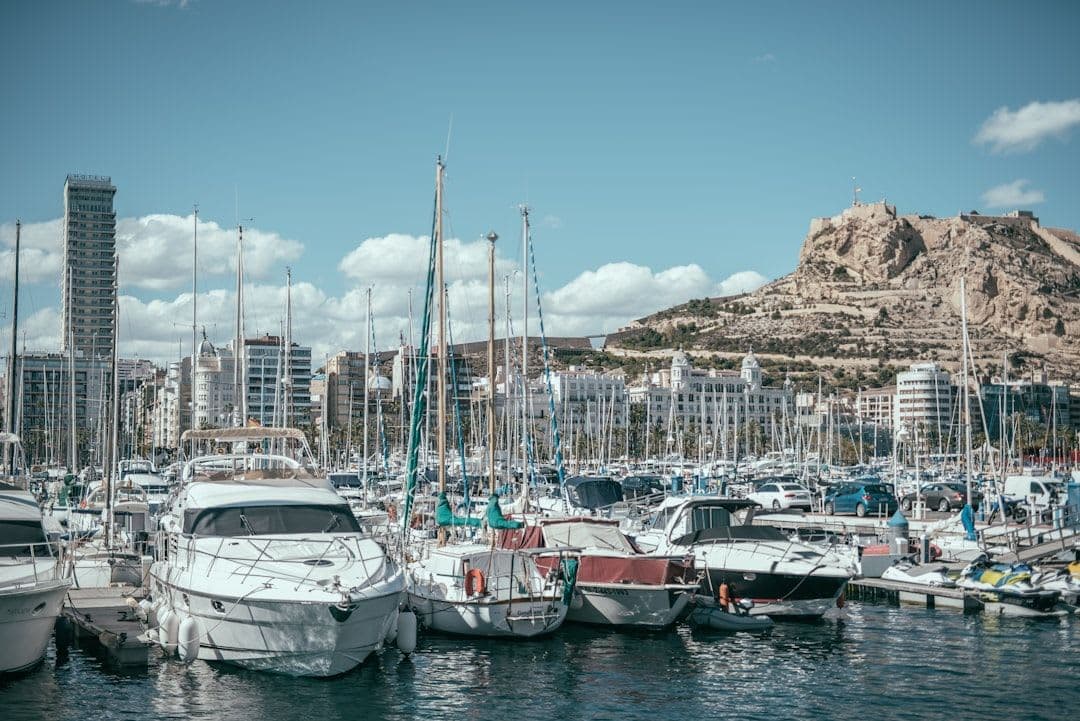
From Alicante, the stretch toward Cabo de las Huertas is attractive because of its coves, rock and clear water. That is exactly why it should not be treated like a nautical car park. Respect buoys, bathing areas, distance from the coast and visible seabeds. If the outing is short or the bottom is hard to read, panoramic sailing may be better than forcing a difficult anchorage.
For short plans where the main goal is to see the city from the sea, a boat route around Alicante Bay can be enough without searching for complicated anchorages.
Tabarca Island
Tabarca is especially sensitive and very popular. In high season there is traffic, day-trippers, private boats, snorkelling and regulated areas. Do not improvise anchoring near seagrass or buoyed zones. With a skipper, follow their judgement; if you sail independently, check the applicable rules, nautical charts and current restrictions before leaving.
If your priority is swimming and spending the day near the island, plan with margin. Arriving late to a full area increases the risk of looking for poor gaps, ending too close to other boats or dropping the anchor where it should not go.
Campello, Villajoyosa and Benidorm
On the open stretches north of Alicante, the summer thermal wind can change anchoring comfort during the day. A place that looks calm in the morning can have more chop or swinging room issues in the afternoon. The responsible decision is not only environmental: it also avoids dragging, close calls and tense manoeuvres when lifting the anchor.
Altea, Calpe, Moraira and Javea
The Marina Baixa and Marina Alta concentrate sought-after coves, clear bottoms and high boating pressure in summer. Altea, Calpe, Moraira and Javea require careful bottom checks and respect for any authorised buoy field or regulated area. On mixed bottoms, a small sandy gap is not always enough for a boat with real length and swinging room.
In these areas, environmental mapping tools and local support apps are useful before departure, without replacing visual judgement or current local rules.
Common summer anchoring mistakes
The same mistakes appear every season:
- Dropping anchor in the first free gap without reading the bottom.
- Watching only where the anchor falls and forgetting where the chain will lie.
- Staying too close to another boat because "it is only for a while".
- Ignoring that the wind can shift and change the swinging radius.
- Anchoring near swimmers, channels or buoyed areas.
- Starting the engine in shallow water and stirring sediment.
- Dragging the anchor while lifting it instead of positioning above it and raising it vertically.
- Throwing food waste, cigarette ends, plastics or wipes into the sea.
A professional skipper usually avoids these errors almost automatically. Bareboat groups should be more conservative: if it is not clear, do not anchor.
How to lift the anchor without dragging the seabed
Leaving also matters. To weigh anchor cleanly:
- Start the engine and make sure everyone is seated or holding on.
- Move slowly toward the anchor while retrieving chain.
- Avoid pulling diagonally for many metres.
- When the boat is almost above the anchor, lift it vertically.
- If it comes up with algae or living remains, do not tear or treat them as rubbish; review whether the anchorage was wrong and clean without damage.
- Leave the area at low speed, respecting swimmers and nearby boats.
If the anchor does not come free, do not accelerate aggressively. It may be caught on rock, another chain or an obstacle. Forcing it can damage the seabed, windlass or boat.
What the crew can do to help
Responsible anchoring is not only the skipper's job. The crew can help:
- Bring polarised sunglasses to help identify sandy patches.
- Do not pressure the skipper to "get a little closer" if there is no safe room.
- Avoid jumping in before the boat is secure.
- Do not use soaps, shampoos or products that end up in the sea.
- Keep rubbish, cigarette ends and food waste on board.
- Respect nearby snorkellers, paddle boards, kayaks and swimmers.
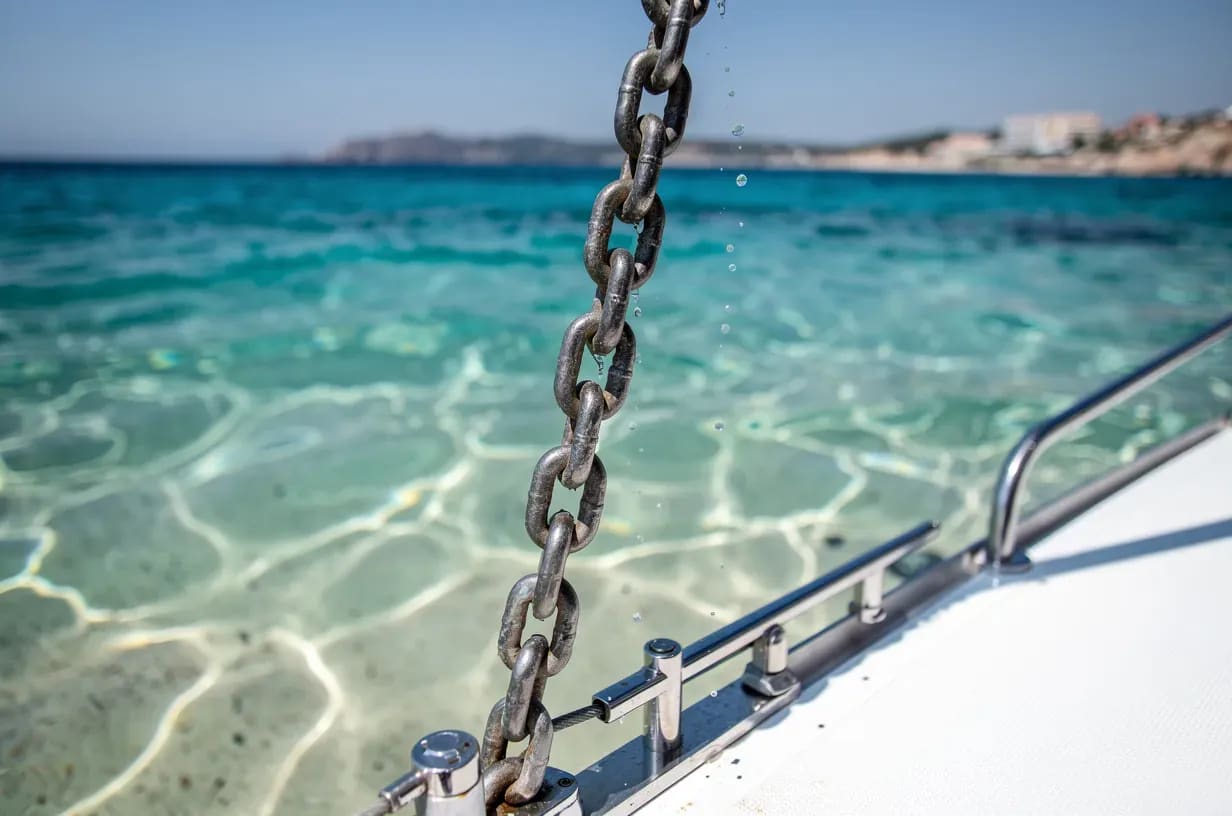
- Ask before touching the windlass, chain or anchor lines.
With children or large groups, one simple rule helps: nobody swims until the skipper confirms the boat is secure.
Responsible anchoring with a charter boat
If you rent a boat with skipper, ask which areas are normally suitable for that day's wind. A good skipper does not promise one exact cove at any cost: they propose safe alternatives and adjust the plan if the anchorage is full, too exposed or the bottom cannot be read clearly.
If you rent without a skipper, check:
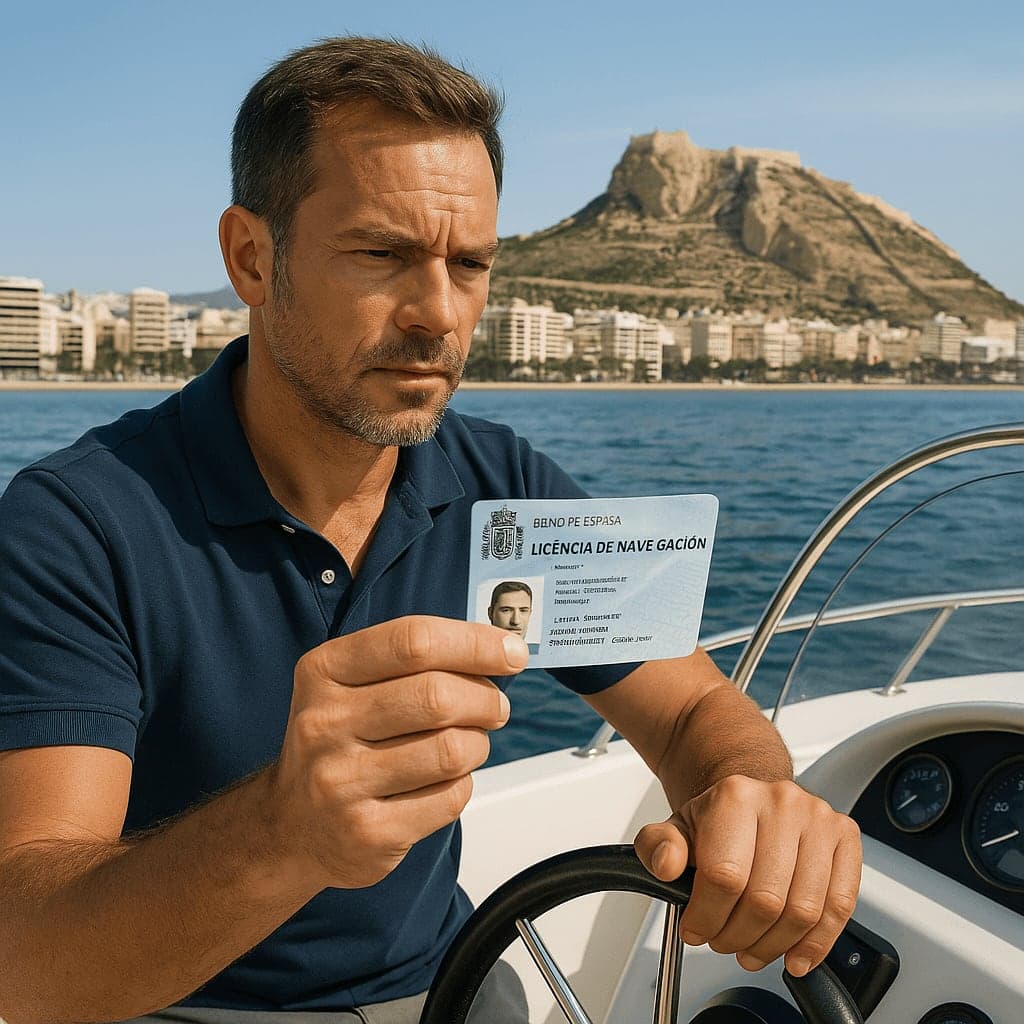
- The licence and real experience of the person in command.
- Updated nautical charts and support apps.
- Ground tackle suitable for the boat length.
- Minimum safe depth.
- Wind and sea forecast for the whole slot, not only departure time.
- Protected areas, buoys, reserves and temporary restrictions.
For many groups that want to enjoy the route without managing the manoeuvre, this educational guide to what is included in a skippered boat in Alicante explains how local skipper decisions affect safety, timing and anchoring choices; the Peggy sailing yacht page also gives useful context on the actual boat layout for planning a comfortable stop. The practical point is simple: the group focuses on swimming and the route, while the skipper decides where stopping is safe for both people and seabed.
Quick checklist before dropping anchor
Before anchoring, confirm these five points:
- I can see enough sand, not Posidonia.
- There is room to swing without invading seagrass, rocks, swimmers or other boats.
- Depth and chain length are suitable for the anchor to work.
- The wind and sea forecast will not make staying here uncomfortable or unsafe.
- I can lift the anchor vertically and leave without dragging.
If one of the five fails, look for another place or keep sailing. In summer, giving up a poor anchorage is often the best decision of the day.
In summary
Responsible anchoring on the Costa Blanca means combining enjoyment, safety and respect for the seabed. The practical rule is clear: choose sand, avoid Posidonia, calculate swinging room, use authorised buoys where they exist and do not force crowded coves in high season.
A good anchorage leaves almost no trace. The boat stops, the crew swims, the anchor comes up clean and the seabed remains as it was. That is the standard that should guide any summer outing from Alicante and the rest of the Costa Blanca.
Sources consulted
These sources were checked on 19 June 2026 for the legal and environmental context. They do not replace updated nautical charts, harbour authority notices, weather forecasts or local skipper judgement on the day of departure.
- BOE: Royal Decree 191/2026 of 11 March.
- MITECO: royal decree for the conservation of Posidonia oceanica and Cymodocea nodosa meadows.
- Generalitat Valenciana: Decree 64/2022 on conservation of marine phanerogam meadows.
- Oceanografic: Projecte Posidonia and support for responsible anchoring in the Marina Alta.