Hogueras From The Sea Safety In Alicante: Nautical Good Manners
Updated: 2026-06-21. Informational guide for Hogueras 2026, valid only if no same-day maritime circular, harbour instruction, weather warning or event safety notice changes the plan before boarding. Editorial meta title: Hogueras from the sea in Alicante: nautical safety. Editorial meta description: safety guide for watching Hogueras from the sea in Alicante with official sources, anchoring checks, swimmers, weather and local skipper judgement.
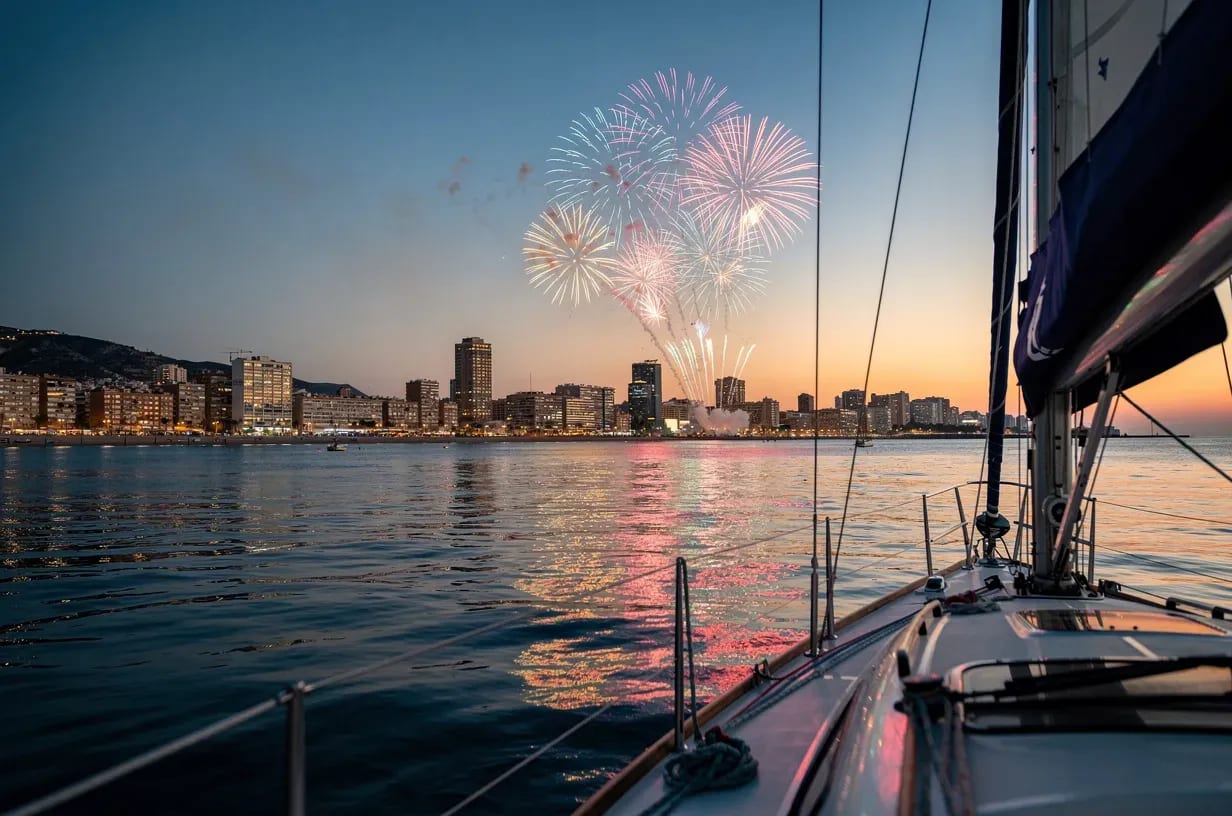
Alicante's Hogueras feel different from the water: fewer crowds, a clean view of Postiguet and the city lit up behind the fireworks. But a major fiesta night is not a normal summer sail. There is more traffic, more people swimming close to shore, pyrotechnics, busier port approaches and decisions that should be left to the skipper before departure.
This guide explains how to enjoy Hogueras from the sea responsibly: where to look from, which areas to avoid, how to behave around swimmers, what to check before anchoring and when a sunset plan is a better choice than a night outing. It is editorial guidance only; it does not set prices, deposits, fixed formats, or commercial conditions. It is editorial guidance, not a booking page, a fixed anchoring promise or a substitute for the skipper's decision on the day.
Why Safety Changes During Hogueras
On a normal summer evening, Alicante bay already brings together leisure boats, paddle boards, swimmers, jet skis and port traffic. During Hogueras, one more factor appears: thousands of people gather along the seafront and many concentrate on beaches such as Postiguet, San Juan and Albufereta.
Alicante City Council places the 2026 Hogueras fireworks castles from 25 to 29 June at midnight on Postiguet beach, according to the official Fogueres 2026 programme and the municipal Alicante news and notices page. That concentration means a good night depends less on getting close and more on choosing a prudent, stable and respectful position.
The practical rule is simple: if a manoeuvre that would be comfortable at 18:00 becomes tight at night, with swimmers or other boats nearby, do not do it. Wait, open distance or change anchorage.
Sensitive Areas: Beach, Port And Access Channel
The first mistake is thinking that "from the sea" means being as close to the beach as possible. On fireworks nights, the best view is not always the front row. You also need room to turn, respect bathing areas and keep access routes clear.
Treat these areas with special care:
- Directly off Postiguet: the most attractive visual point, but also the most sensitive because of pyrotechnics, swimmers and boats looking for the same angle.
- Harbour mouth and port surroundings: not a viewpoint. There is professional traffic, boats entering and leaving, and manoeuvres that need space.
- Marked bathing zones: never cross them or use them as a shortcut. If swimmers are outside the buoy line, slow down, open distance and avoid sudden manoeuvres.
- Unclear seabeds or possible marine vegetation: anchor only where the skipper is confident about the bottom and swinging room.
As a pre-departure reference, check the dated official sources in the next section, the Alicante Port Authority notices area and any same-day instructions issued in the harbour. If there are specific instructions about the harbour mouth, access channel, safety areas or beach operations, they take priority over any plan made from shore.
For a calmer view, it often works better to stay a little wider and accept a lateral angle. The difference in photos is small; the difference in safety and coexistence can be huge.
Legal Frame, Dated Sources And Same-Day Notices
This article does not replace a notice from the harbour master's office, Port Authority, Guardia Civil, maritime rescue, Local Police or event staff. The public sources checked for this 21 June 2026 update are listed below so readers can verify the calendar layer separately from the nautical decision:
- Official Fogueres 2026 programme from Alicante City Council, published for the 2026 edition.
- Fogueres 2026 traffic and transport plan, published on 19 June 2026, including the land-side safety area around Postiguet.
- Municipal notice from 23 February 2026 about the Nit de Sant Joan palm firework and Hogueras pyrotechnics, used only as a municipal supplier/pyrotechnics source and not as a maritime operating instruction.
- Possible communications from the Alicante Port Authority and the port's cruise call forecast for traffic awareness.
- Weather and sea state from the AEMET maritime forecast and Puertos del Estado.
Checked on 21 June 2026: this article has not found a public maritime circular with a direct reference number for small leisure craft during the Postiguet fireworks. That absence is not permission to improvise. If the event day includes a maritime safety area, traffic instruction, schedule change or temporary limitation, that instruction overrides any general recommendation in this guide. If no specific maritime circular is publicly available, the skipper should validate the outing against same-day official notices and instructions received at the harbour.
Conditions That Cancel Or Change The Plan
Treat the plan as provisional until boarding. A responsible skipper should cancel, delay, shorten or change the route if any of these conditions appear:
- A maritime authority, harbour staff, Guardia Civil, maritime rescue or event team gives a different instruction on the day.
- AEMET or real harbour conditions show gusts, poor visibility, swell or short chop that make night anchoring uncomfortable.
- The harbour mouth, Postiguet front or return route becomes too congested to manoeuvre with margin.
- Swimmers, paddle boards or unlit small craft are close enough to make movement unsafe.
- The anchor does not hold cleanly, the swinging circle is too tight or nearby boats create crossing risks.
- The group cannot follow basic night-safety rules: seated during manoeuvres, one hand on the boat and no swimming without permission.
Swimmers And Good Manners: Non-Negotiables
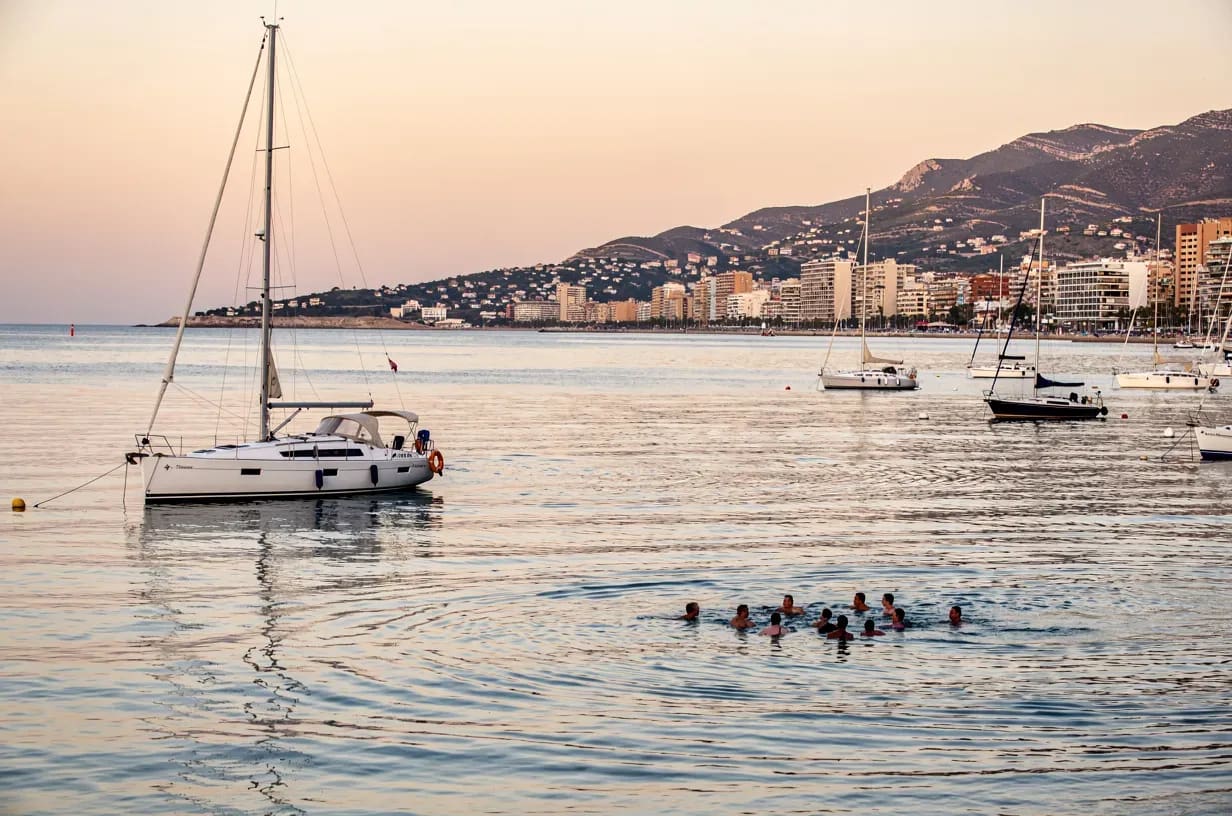
Nit de Sant Joan and the following nights have a close relationship with the water. People swim at midnight, groups move toward the shoreline and some misjudge distance from boats. From a vessel, the responsibility is to anticipate.
Good practice on board:
- Keep continuous visual watch, especially ahead and on both sides, before moving.
- Do not start the engine if people are close to the hull, stern or anchor line.
- Avoid loud music when near other boats or the beach.
- Do not throw cigarette ends, cups, food or waste into the sea.
- Do not aim strong lights at the beach or other skippers unless required for safety.
- Respect instructions from rescue services, Guardia Civil, Local Police, Port Authority or event staff.
A beautiful night from the water should not make the evening worse for people on the sand or for other sailors. That is the difference between having a good spot and occupying space badly.
Anchoring For Fireworks: Criteria Before Coordinates
During Hogueras, promising an exact coordinate is not wise. Wind, traffic, temporary buoyage and authority notices may move the final position. What matters is understanding the skipper's criteria:
- Enough distance from the launch point and beach. Pyrotechnics are easy to enjoy without pushing the limit.
- Suitable bottom for the anchor. Sand and swinging room beat a photogenic but awkward position.
- A clean exit after the show. If all boats move at once, a return route with fewer crossings matters.
- Real visibility. A slightly wider position can offer a better panorama than a closer area with obstacles.
- Margin to change the plan. If the wind shifts or swell arrives, comfort and safety come first.
In Alicante bay, the afternoon sea breeze can leave a different swinging angle once night falls: the boat may rotate around the anchor with a new wind angle. That is why a skipper will usually check the anchor line twice: on arrival and again before the fireworks, once the surrounding boats have settled. The skipper also watches for anchor drag, meaning the anchor is not holding cleanly on the bottom. After the show, it is often safer not to lift anchor in the first minute if several boats around you are leaving at the same time; a short wait can avoid unnecessary crossings toward the harbour mouth.
| Operational factor | What to check before departure | Prudent decision |
|---|---|---|
| Wind and gusts | AEMET forecast, evening trend and possible wind shift | If gusts make anchoring uncomfortable, change to a short sail or postpone |
| Swell or short chop | Puertos del Estado sea state and real observation on departure | Avoid exposed anchoring and prioritise a comfortable return |
| Night visibility | Shore lights, other boats, swimmers and firework reflections | Slow down, keep a visual watch and avoid manoeuvres near groups |
| Harbour-mouth traffic | Port entries and exits, cruise calls or authority instructions | Do not use the harbour mouth as a viewpoint; wait if traffic concentrates |
| Anchor and swinging room | Seabed, rode, nearby boats and possible anchor drag | Anchor only with margin; if the anchor does not hold cleanly, lift and reset |
So when you ask "where is the best place to watch the fireworks?", the honest answer is not a fixed point on the map. It is an approximate area and a final decision made on the water.
Before Departure: Basic Checks
A night outing during fiestas should not be improvised. Before boarding, confirm:
- Wind, sea and visibility forecast from the AEMET maritime forecast.
- Sea state and wind for the coast through Puertos del Estado, especially if the plan depends on comfortable night anchoring.
- Real fireworks schedule and any changes published by Alicante City Council.
- Boarding time with enough margin to avoid anchoring at the last minute.
- Exact passenger count and IDs if the skipper requests them.
- Light warm clothing, even in June.
- Stable footwear with non-slip soles.
- Charged phone batteries and a dry bag for delicate items.
- Enough water, especially if dinner or drinks are part of the plan.
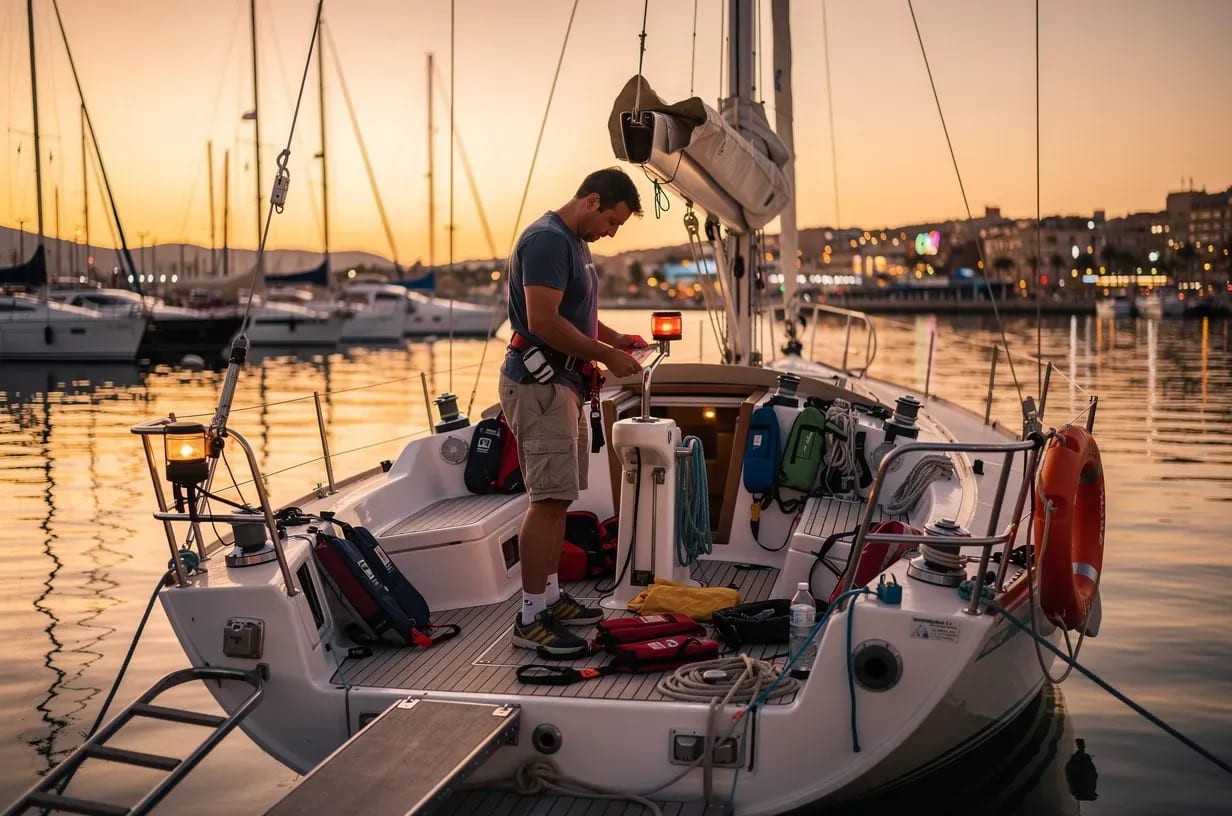
The skipper should explain before departure where lifejackets and safety gear are stored, how to move on deck at night and which areas of the boat are off limits during manoeuvres. It does not need to become a technical briefing, but three points should be clear: sit during manoeuvres, keep one hand on the boat and nobody enters the water without the skipper's permission.
| Moment | Key check | Prudent decision |
|---|---|---|
| Before departure | Weather, official notices, passengers and safety gear | Leave only if the plan has room to change |
| While anchored | Distance from beach, swimmers, other boats and anchor drag | Open distance before the manoeuvre becomes urgent |
| Return to port | Traffic leaving after the fireworks and real visibility | Wait, tidy the deck and return without forced crossings |
When It Is Better Not To Swim From The Boat
A midnight swim may feel like part of the San Juan plan, but it is not always a good idea from an anchored boat. Some nights bring too much traffic, low visibility or nearby groups that make staying on board the wiser option.
Avoid swimming from the boat if:
- Boats are manoeuvring nearby.
- Visibility is low or background lights make distances confusing.
- The group has consumed alcohol.
- There is no clear ladder and no person watching from deck.
- The skipper says it is not safe.
If swimming is part of the plan, it should happen with the skipper's permission, engine off, watch from deck and a simple way to climb back on board. At mass events, the best decision is often to enjoy the water as scenery, not as a bathing area.
What A Local Skipper Adds On A Busy Night
During Hogueras, the value of a local skipper is not just driving the boat. It is reading the situation: knowing when to open distance, which course to avoid, where not to wait, how to interpret other boats' lights and when a night that looked perfect needs a plan B.
That judgement matters most at three points: leaving the harbour, waiting before the fireworks and returning when several boats start moving at the same time. A skipper who knows Alicante bay can assess real wind, group comfort, swimmer separation and manoeuvring room without relying on a fixed coordinate.
Commercial boat details, if consulted on the Peggy page, should stay separate from this guide. Capacity, crew, base port, equipment and specific terms depend on the boat and date; for a safe decision here, the priority is operational judgement: weather, traffic, distance from bathing areas, night visibility and a return route with margin.
A professional skipper also protects the experience. If the group wants photos, music and a toast, someone still needs to watch the wind, anchor drag, swimmers and the return. On a night with pyrotechnics, that division of responsibility is what lets everyone relax without lowering safety standards.
As complementary reading, the guide to San Juan Bonfires 2026 from the sea in Alicante covers dates and fiesta context.
Calmer Alternatives If You Do Not Want An Intense Night
Not every group needs to be in the middle of the fiesta. For families, people sensitive to noise, groups with little boating experience or anyone who prefers to avoid a busy night return, a sunset can be the better call.
Reasonable options:
- Leave before the fireworks and return to port with residual light.
- Anchor farther out and accept a panoramic view.
- Choose an afternoon outing on another Hogueras week date.
- Combine a morning visit to the city with a sunset sail.
The Alicante nautical agenda for June 2026 helps you combine Hogueras with other plans during the month instead of putting everything into one night.
Useful Questions Before Choosing The Plan
Before choosing a night outing for Hogueras, answer practical questions rather than commercial ones. The date, number of people, previous boating experience, presence of children, sensitivity to seasickness and tolerance for noise affect safety more than the exact viewing position.
It also helps to separate three goals: seeing the atmosphere from the bay, anchoring for the fireworks, or doing an afternoon sail and returning before the largest concentration. Each format needs a different approach to timing, light, comfort and the return to port.
The important point is not to promise an exact position, a fixed anchorage or a manoeuvre that depends on the authority, wind or night traffic. First confirm the safety criteria: departure margin, route away from the harbour mouth, distance from bathing areas, group comfort and a return that does not force crossings with other boats just after the fireworks.
If you are still comparing a short outing, sunset or half-day format, the guide on how to choose a short boat trip in Alicante helps set duration and expectations before choosing a format.
Short Nautical Glossary For This Outing
- Swinging room: the clear circle the boat needs around the anchor as wind or current changes; it matters more than the prettiest viewing angle.
- Anchor drag: the anchor is not holding cleanly and the boat starts moving; if it happens, the skipper lifts and resets before it becomes urgent.
- Harbour mouth: the port entrance and exit; it is not a viewpoint because traffic and manoeuvres concentrate there.
- Access channel: the route that entering or leaving vessels must keep clear; crossing it at night without margin increases risk.
- Swell: sea movement that can arrive even when local wind looks moderate; it can make night anchoring uncomfortable or unsafe.
Practical FAQ Before Boarding
Is leaving exactly at midnight a good idea?
Usually no. If the goal is to watch the fireworks calmly, it is better to board with margin, anchor before the busiest moment and let the skipper decide whether to wait after the show before returning.
What happens if the harbour closes or an authority gives an instruction?
The current instruction is followed. The outing may be delayed, shortened, moved to another area or cancelled even if the weather looks good. No article or booking expectation overrides same-day operational orders.
When should the skipper decide not to anchor?
If gusts are uncomfortable, visibility is poor, swimmers are outside the safe area, unlit boats are nearby, the anchor drags or the return route lacks margin, the prudent decision is to open distance, change to a sail-by plan or return to harbour.
Quick Nautical Good-Manners Checklist
Before leaving to watch Hogueras from the sea, use this list:
- Has the skipper confirmed weather, schedule and anchoring plan?
- Does the group know the final position may change?
- Is there warm clothing and safe footwear?
- Has everyone been told how to move on deck at night?
- Is it clear that nobody swims without permission?
- Will music and lights respect other boats and the beach?
- Is the return planned with margin, not immediately after the last launch?
If every answer is yes, the night starts well. If one fails, fix it before leaving.
In Summary
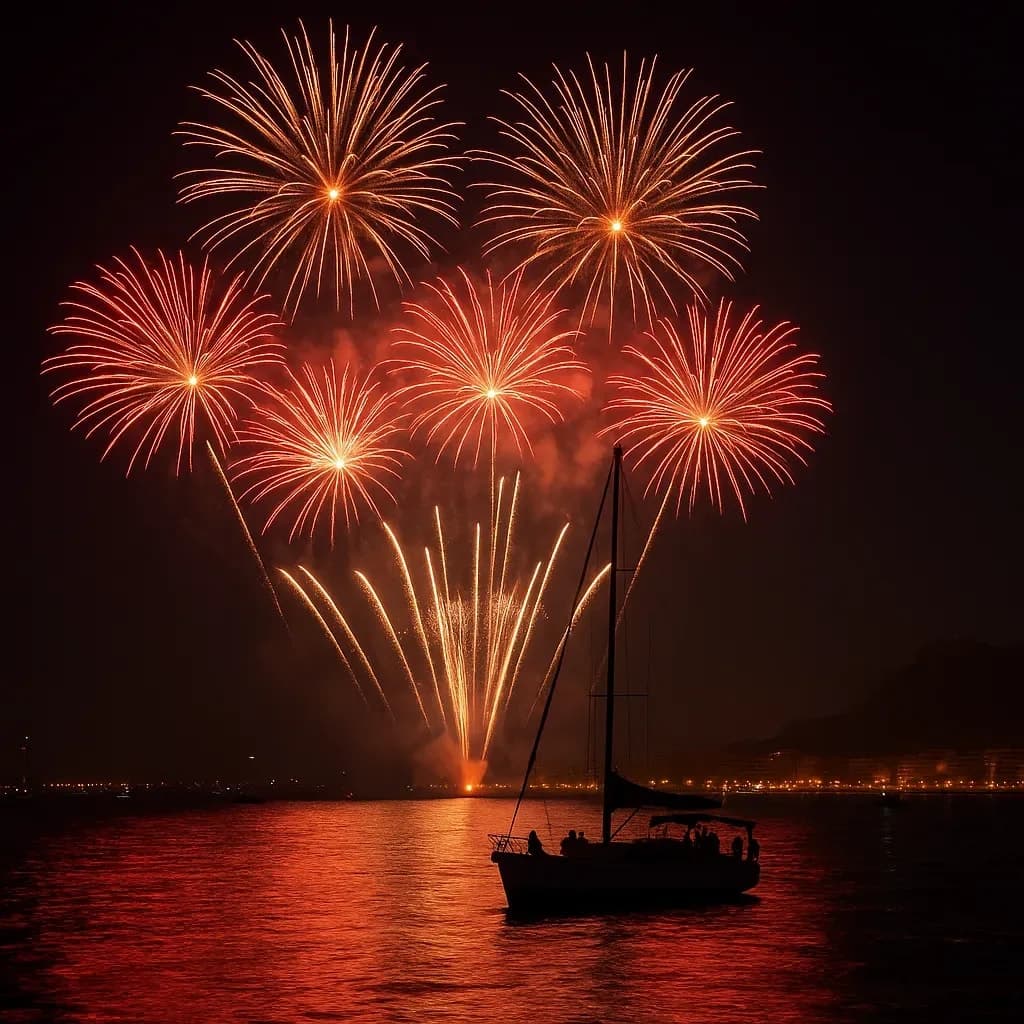
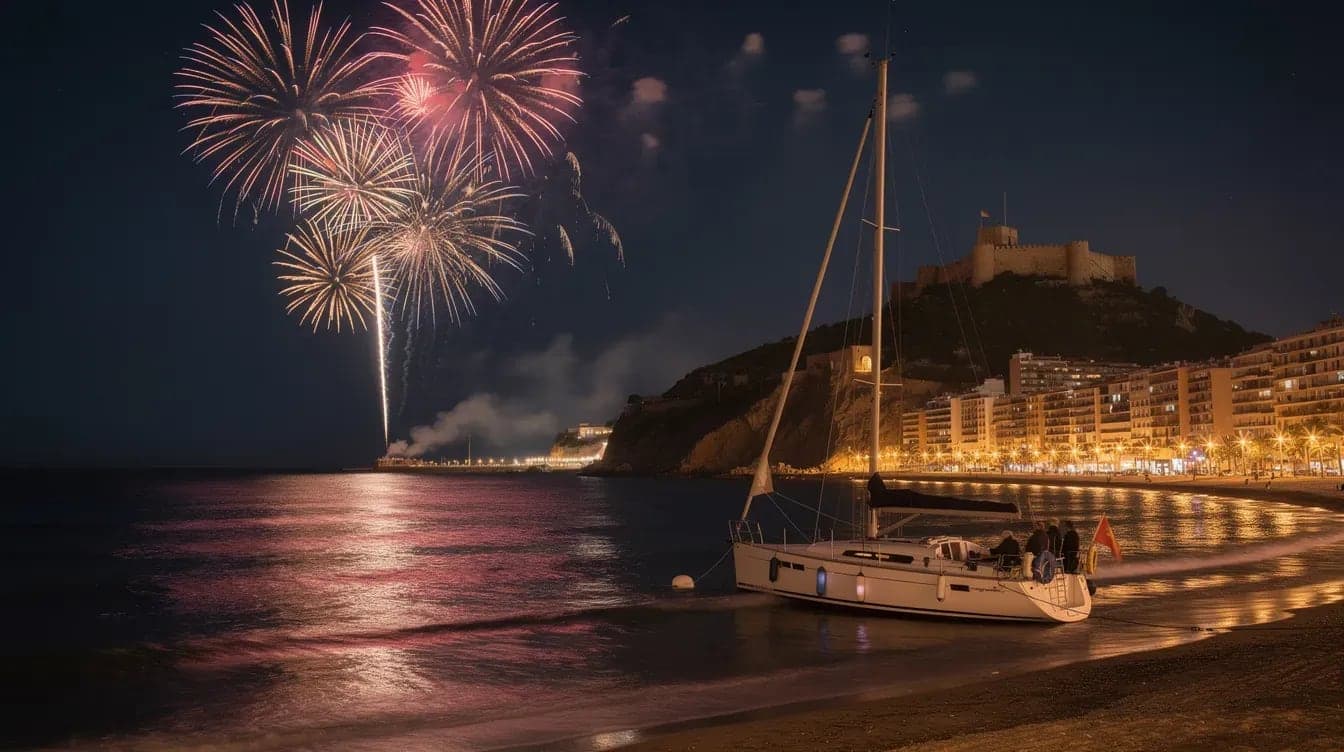
Watching Hogueras from the sea in Alicante can be one of the best images of summer: fireworks over Postiguet, reflections in the bay and the city glowing behind them. But the good experience does not depend on getting closer than anyone else. It depends on sailing with judgement, respecting swimmers and other boats, not invading the port, anchoring with margin and accepting that the skipper may adjust the plan if the night requires it.
The fiesta is better when the boat does not get in the way, does not improvise and does not force manoeuvres. From the sea, the best position is the one that lets you return to port with the same calm you had when you left.
About The Author
Article reviewed by Carlos Heston, skipper and manager of Barcos de Alquiler Alicante. Carlos regularly sails from Alicante port on private outings in Alicante bay, Cabo de las Huertas and the Postiguet area. This article is based on that local operating experience: harbour exits and returns, night anchoring decisions, swimmer separation, wind checks and group briefings used on busy sunset trips and local events such as Hogueras.