Snorkelling in Alicante in July: coves, timing and how to enjoy it responsibly
Meta title: Snorkelling Alicante in July: best time, Tabarca and Cabo de la Huerta
Meta description: Guide to snorkelling in Alicante in July: best coves, timing, safety, Tabarca, Cabo de la Huerta and responsible seabed care.
July is one of the best months for snorkelling in Alicante if you choose the right time, bathing spot and access plan. The sea is usually more inviting than in spring, days are long and the rocky coves around the city offer more varied seabeds than an open sandy beach.
The less comfortable side of July is also clear: more heat, more people, more boat traffic and more need to respect marked bathing areas. That is why snorkelling should be planned as a short, well-placed activity within the day, not as a midday improvisation.
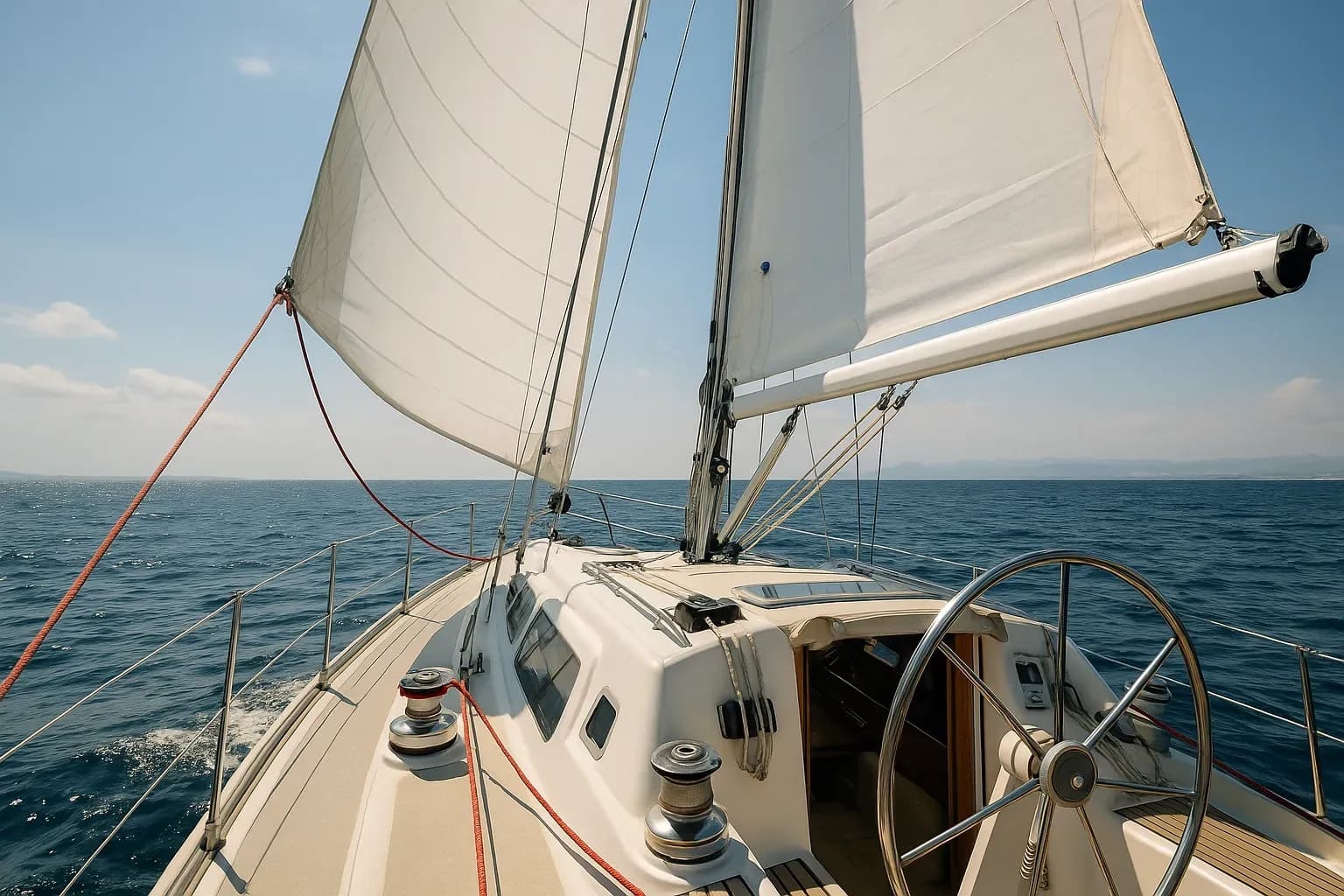
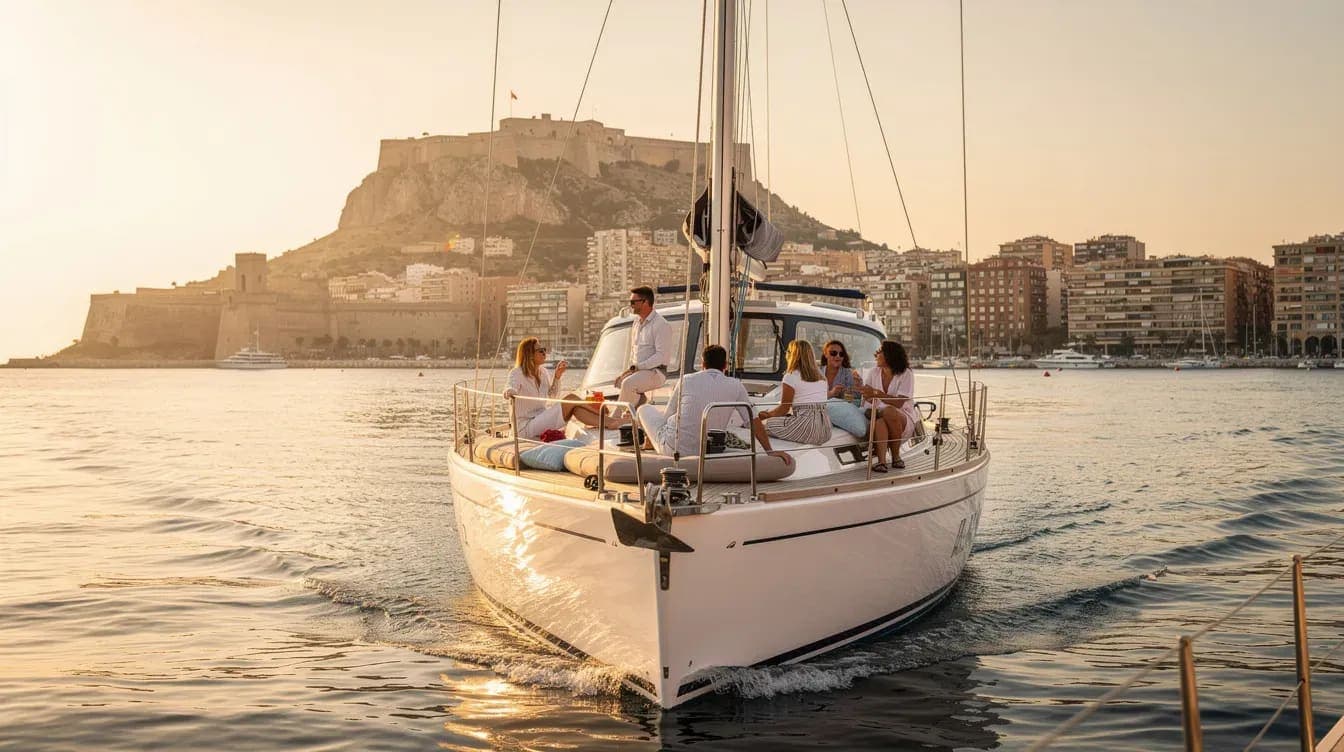
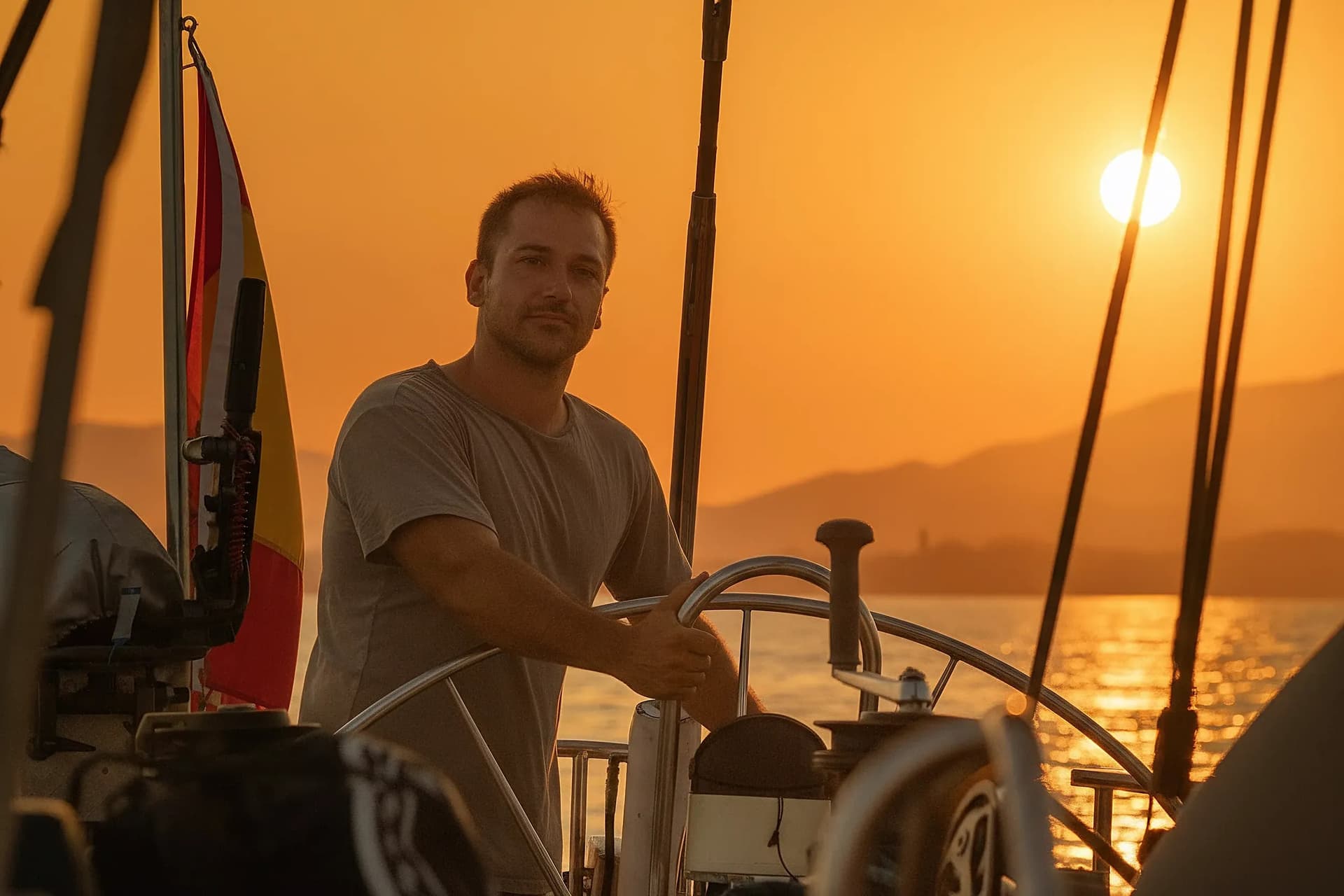
From our experience sailing from Alicante harbour, snorkelling works best when the swimming stop is decided after checking the real sea state, wind and traffic, not from a fixed itinerary days in advance. Carlos, Peggy's local skipper, usually checks three points before stopping: that the ladder is comfortable for getting back on board, that the boat can swing safely without approaching other vessels, and that the group does not need to swim far to enjoy the water.
Where to snorkel in Alicante in July
Cabo de la Huerta
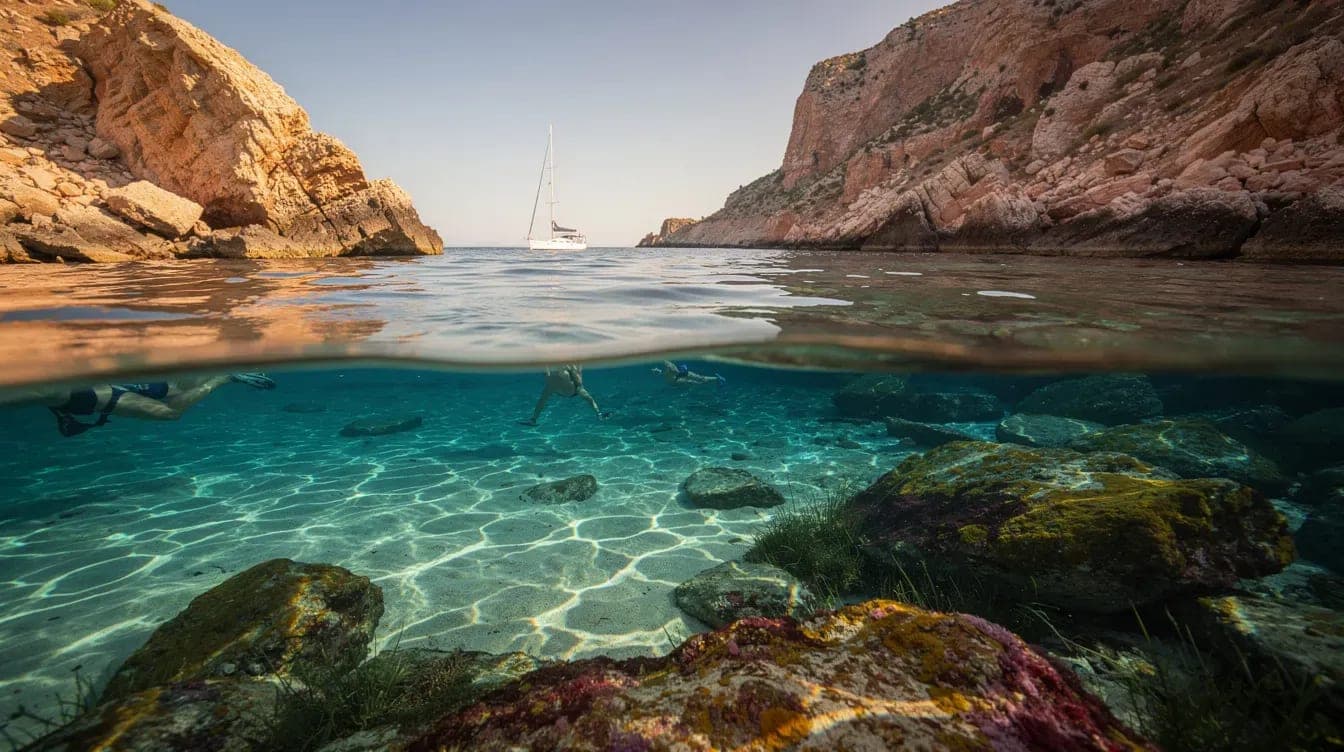
Cabo de la Huerta is the most practical reference for snorkelling close to Alicante city. Alicante Tourism describes its coves as a semi-urban stretch of around 750 metres, with paths and rocky areas between Albufereta and San Juan beach. This type of seabed is usually more interesting for observing marine life than a fully sandy beach.
In July it has two clear advantages: it is close to the harbour and the plan can be adapted to the day's wind. If you go by boat, the skipper can decide whether to approach the area, stay in the bay or choose a more comfortable anchoring spot depending on sea state, traffic and swimming conditions.
Tabarca
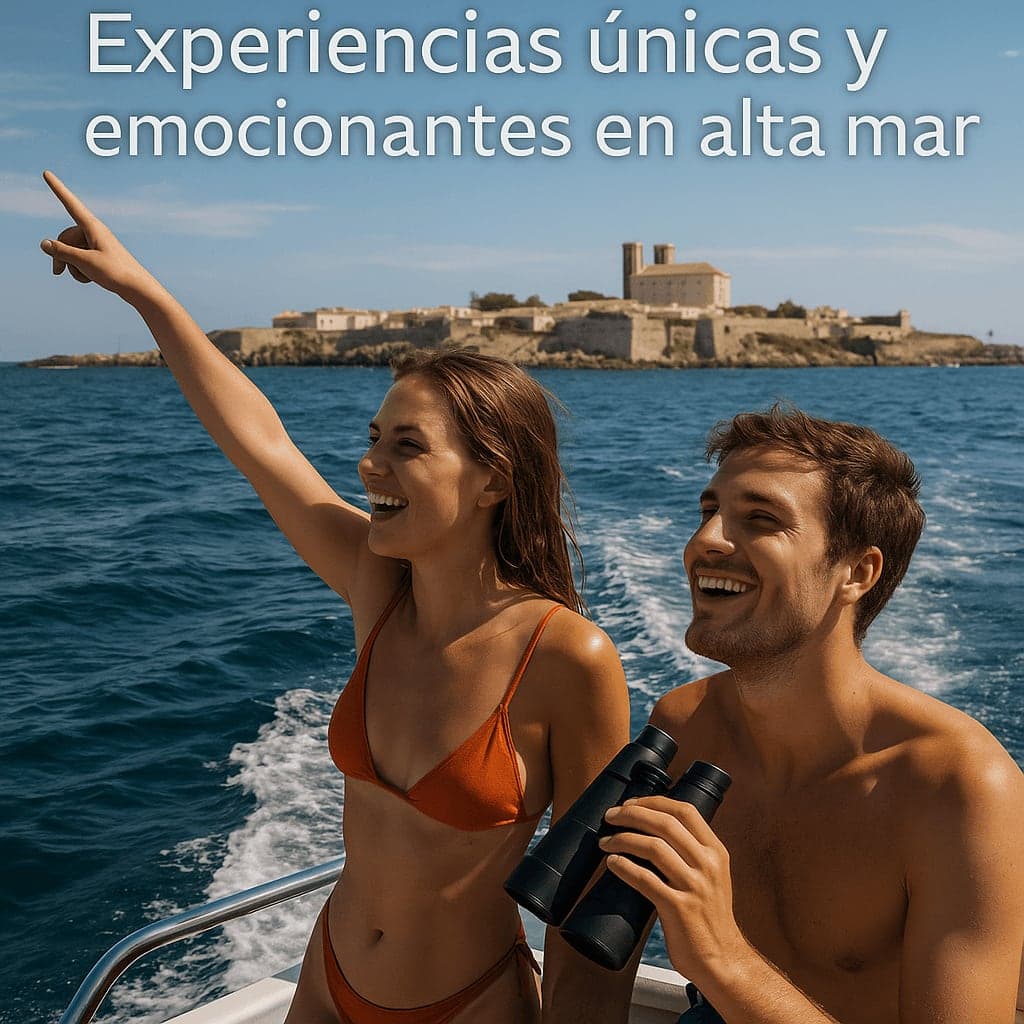
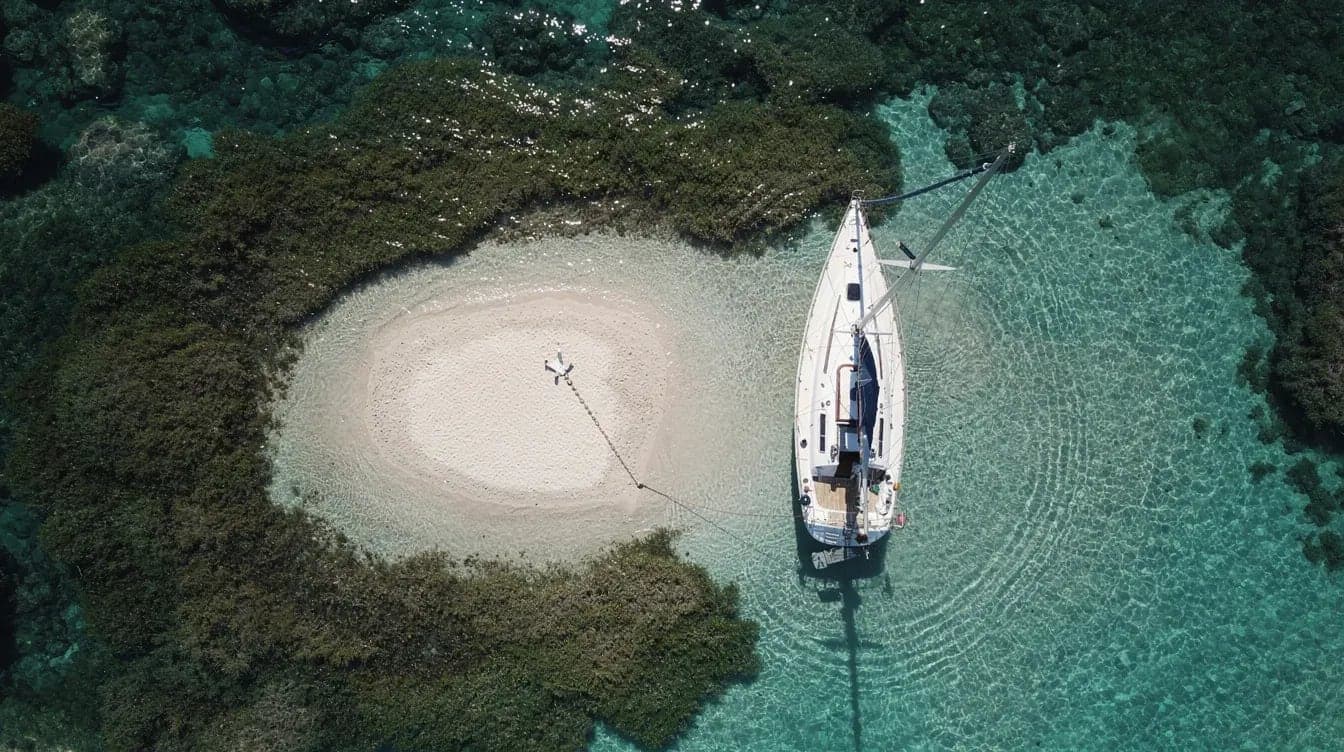
Tabarca is the best-known plan for anyone looking for clear water and a special marine setting. The island, however, requires more margin: a short bay trip is not the same as a Tabarca excursion, and in July you need to consider high occupancy, ferries, private boats and conditions that may change during the afternoon.
For snorkelling, Tabarca works best when the group wants to dedicate a good part of the day to the sea and understands that the skipper's priority will be choosing a safe area, not chasing one fixed photo spot.
Alicante bay and nearby anchorages
Not every group needs to go far to enjoy the water. A trip around Alicante bay by boat can include swimming and gentle snorkelling if the sea state allows it. It is a reasonable option for families, groups with children or anyone who wants a relaxed experience without spending many hours underway.
If swimming is the main goal, it is also worth reading the guide to anchorages and coves in Alicante, because it explains how seabed type, wind and shelter affect each area.
Best time to snorkel in July
In July, timing matters almost as much as location. For most groups, the best windows are:
- Early morning, when there is usually less accumulated heat and less activity on the water.
- Mid-morning, if the marine forecast is stable and the group wants to combine sailing and swimming.
- Late afternoon, if you want a calmer trip and do not depend on maximum underwater light.
The central hours can work, but they are the hardest for heat, sun exposure and fatigue. If the group includes children, older guests or someone prone to seasickness, it is better to plan real shade, hydration and breaks. The guide to going boating in Alicante in hot weather covers this in more detail.
| July time slot | Best for | Expected occupancy | Practical criterion |
|---|---|---|---|
| 09:00-11:30 | Families, beginners, groups focused on swimming | Medium | Best balance between light, heat and flexibility |
| 11:30-14:30 | Groups comfortable with strong sun | High | Requires shade, water and short swims |
| 17:30-20:30 | Couples, friends, relaxed outings | Medium-high | Good option if combined with sunset and gentle sailing |
What to bring for snorkelling in Alicante in July
You do not need complicated equipment for a comfortable plan, but you should avoid basic omissions:
- A mask and snorkel that fit properly; an uncomfortable mask ruins the swim.
- UV shirt or rash vest, especially for children and fair skin.
- Reef-conscious sunscreen, applied before boarding or before reaching the cove.
- Enough water and a light snack.
- Water shoes if entering from rocks or a stony cove.
- Dry bag for phone, glasses and documents.
- Small towel or quick-dry sarong.
If the outing is by boat, confirm in advance what equipment is included. Some private trips may include snorkelling masks or paddle surf, but it should not be assumed. To prepare the full bag, this boat trip packing checklist helps avoid both duplicates and forgotten items.
Safety: what cannot be negotiated
Snorkelling looks simple, but in July there are more users sharing the water. The practical rule is to stay visible, never swim away alone and avoid crossing boat traffic areas.
Before getting in the water:
- Check flags, swell and current.
- Avoid swimming if tired, after alcohol or in poor visibility.
- Swim with someone or, at minimum, with someone watching from outside.
- Do not force breath-holding or chase fish.
- Use a marker buoy if you move away from shore.
- Respect channels, buoys and reserved areas.
AEMET is the official reference for weather forecasts and warnings in Spain, and on a skippered trip the final route and swimming decision must adapt to the real marine forecast of the day. If the skipper changes the swimming stop because of wind, swell or traffic, that is not a failed plan: it is exactly why a safe outing is managed by a skipper.
In addition to AEMET's marine forecast, Puertos del Estado provides oceanographic data and forecasts for waves, sea level, currents and water temperature. For navigation within the harbour environment, Alicante Port publishes safety instructions from the Maritime Captaincy. In practice, this means a simple rule: do not anchor or navigate inside marked bathing areas, and any beach approach must use authorised channels and cautious speed.
One-day plan: simple snorkelling
| Moment | Decision | Reason |
|---|---|---|
| Before choosing the date | Decide between short trip, half day or Tabarca | Each format requires different timings and expectations |
| 24-48 hours before | Check the marine forecast | Wind and waves can change the swimming spot |
| At the harbour | Confirm gear, shade and water | Avoid relying on improvisation |
| While sailing | Let the skipper choose the stop | Safe anchoring matters more than the cove name |
| After swimming | Dry off, hydrate and rest | Reduces fatigue and seasickness on the return |
Snorkelling from a cove or from a boat: which is better?
Snorkelling from a cove is simpler if you go independently, have little time and do not mind carrying the gear. The drawback in July is obvious: parking, busy access paths, hot rocks, limited space and more sun exposure.
From a boat, the plan changes. If you want to compare formats first, check the boat services in Alicante. It is not only about reaching a nice place, but about making the swim a comfortable part of the experience: shade, rest, drinks, ladder access and the option to move if the area is not right. For groups, couples or families, that usually makes a real difference.
A private outing also lets snorkelling fit into a wider route: sailing around the bay, swimming stop, light snack and return without carrying everything overland. If you are comparing formats, the guide to boat excursions in Alicante helps decide between a short trip, half day or full day.
What seabed can you expect?
Snorkelling in Alicante should not be sold as if it were a tropical reef. The honest expectation is a Mediterranean seabed: rock, sand, protected seagrass in sensitive areas, small fish, changing light and water clarity that depends on wind, swell and traffic.
Visibility improves when the sea has been calm for several days and worsens with stirred water, strong wind or heavy activity near the coast. In areas with marine vegetation, you should not pull, touch or anchor over sensitive habitats. To understand why this matters, read the guide to responsible anchoring on the Costa Blanca.
Recommended July plan
For a first snorkelling experience in Alicante in July, the most balanced plan is usually:
- Go out in the morning or late afternoon.
- Sail calmly around the bay.
- Stop for a swim in a sheltered area chosen by the skipper.
- Keep snorkelling short and stay close to the boat.
- Rest, hydrate and return without pushing the heat.
If the group wants Tabarca, it is better to treat it as a longer, flexible outing, not as a fixed promise to swim at one exact point. In high season, good planning matters more than a list of place names.
Sources consulted
- Alicante Tourism, "Calas del Cabo de la Huerta": https://alicanteturismo.com/playas/calas-del-cabo-de-la-huerta/
- AEMET, official forecasts and warnings: https://www.aemet.es/es/portada
- AEMET, marine forecast for Valencia and Murcia coast: https://www.aemet.es/es/eltiempo/prediccion/maritima?area=val1&opc1=0&opc3=0
- Puertos del Estado, oceanography and forecasts: https://www.puertos.es/servicios/oceanografia
- Alicante Port, Maritime Captaincy safety instructions: https://www.puertoalicante.com/noticia/instrucciones-de-seguridad-capitania-maritima-de-alicante/
- Spain.info, tourist information for Alicante-Alacant: https://www.spain.info/en/destination/alicante-alacant/