Santa Faz Solidarity Swim in Alicante: 2026 route and sources
Meta description: Santa Faz Solidarity Swim Alicante 2026: Postiguet-San Juan route, official sources, nautical community and Santa Faz context.
Every spring, Alicante lives one of its most deeply rooted traditions: the Romería de la Santa Faz, a pilgrimage that brings together hundreds of thousands of people walking the eight kilometres between the historic city centre and the Santa Faz Monastery. But there's another way to live this tradition — one that swaps asphalt for salt water and espadrilles for wetsuits.
The 15th Santa Faz Solidarity Swim - Jorge Crivillés, held on 18 April 2026, has once again shown that Alicante's nautical community has something special: the ability to bring together sport, charity and a love for the sea in a single event. What began as a local initiative
Event Sources and Limits of This Report
Editorial review date: 27 June 2026. The Crono4Sports page for the 15th Santa Faz Solidarity Swim - Jorge Crivillés confirms 18/04/2026, a 09:00 start, 9,000 metres, departure from Playa del Postiguet and finish at Playa de San Juan. For the pilgrimage context, Alicante City Council explains the traditional calendar and Spain's BOE publishes Decree 59/2026 declaring the pilgrimage an intangible BIC. RC7 Alicante's Santa Faz Swim page describes the challenge as a 9 km open-water route between Postiguet and San Juan.
References to maritime support, buoys, auxiliary boats or radio coordination should be read as normal safety requirements for an open-water swim, not as a closed list of assets confirmed for every edition. The organiser and competent authorities define the final safety plan.
Fact-check: date, distance, start/finish and organiser checked against Crono4Sports/RC7; operational claims not published by the organiser have been softened as general context. to honour Jorge Crivillés has become, fifteen editions later, one of the most anticipated dates on the Costa Blanca's open-water calendar.
9 kilometres swimming along the Alicante coast

The route of the swim is, in itself, a postcard. Swimmers set off from Postiguet Beach — right at the foot of Santa Bárbara Castle — and cover nine kilometres of coastline all the way to San Juan Beach, the longest beach in Alicante. It's exactly the same stretch of coast that sailboats cover on boat trips from Alicante: Postiguet, Almadraba, Cabo de las Huertas and San Juan.
The profile of the participants is wonderfully varied. Federated open-water swimmers, triathletes in early-season form, amateurs who have trained all winter in indoor pools waiting for this day, and even families who turn up at the port just to see their loved ones start. Some cover the full 9 km at a steady pace, others choose the shorter route; the important thing, as the organisation reminds everyone every year, is not your personal best but crossing the finish line.
Organised by the RC7 Association together with Crono4Sports, the swim is non-competitive and charitable. It's not about arriving first, but about arriving — and doing so knowing that every stroke helps a good cause. Proceeds from the 15th edition, as in previous years, go to Alicante-based charities working with children and vulnerable groups.
How a 9 km open-water swim is organised from the sea
Behind the epic picture of hundreds of coloured swim caps crossing the bay lies a carefully planned naval logistics operation. The safety set-up is what makes an open-water event of this size possible without incident, and understanding it helps explain why the local sailing community is essential to the swim's existence.
The course is marked with reference buoys every few hundred metres, visible from the water despite any chop. The start is staggered in waves to prevent less experienced swimmers from being trapped in the initial peloton. Along the route, an event of this kind requires support boats, buoyage and coordination with the services defined by the organiser. This article does not publish a closed list of safety assets because those details must be checked in the official rules and safety plan for each edition.
Communication between boats runs on a previously agreed VHF channel, and each section of the course has a leader who reports every swimmer's passage back to the race director. If anyone pulls out, they are helped on board, wrapped in a thermal blanket and returned to shore — and that is part of the day's success too: that nobody ends the morning with a real scare.
The bathymetric profile of the Postiguet–San Juan stretch itself helps: these are coastal waters where wind, swell, surface current and visibility can change, so the safety plan must match the day's forecast. That is one of the reasons why this same route works so well for sailboats with families on board, as we will see later.
The RCRA and a community that lives facing the sea

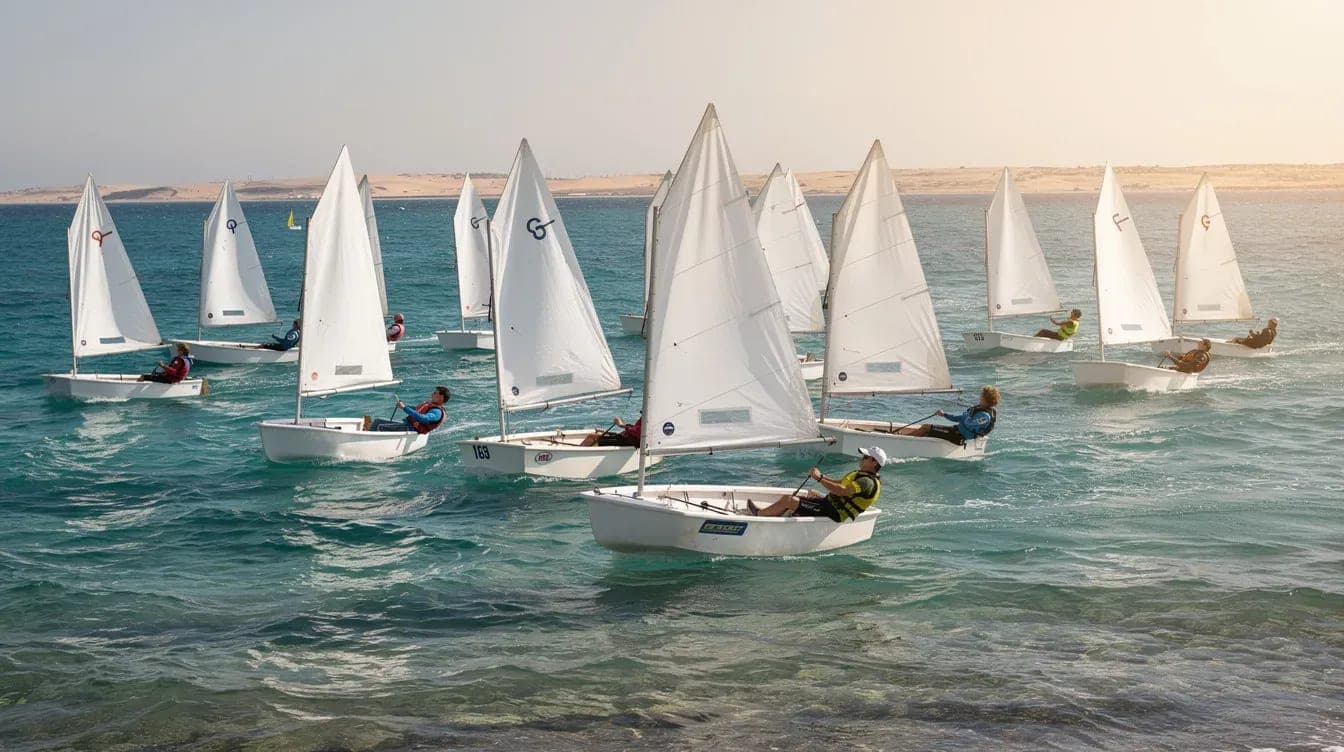
One of the most moving moments of the day was the participation of the SCM rowers from the Real Club de Regatas de Alicante (RCRA), who supported the swimmers' start from the Postiguet. The RCRA isn't just a sports club: it's the epicentre of nautical life in Alicante. From its facilities at the port, it organises regattas such as the legendary TabarcaVela, trains young sailors and keeps alive a seafaring tradition with centuries of history.
That the same club that hosts international regattas sends its rowers to support a charity swim says a lot about how Alicante's nautical community works: here, everyone rows — literally and figuratively — in the same direction. In some editions, yacht clubs, boat owners and nautical volunteers support the logistics coordinated by the organiser; the exact details should be confirmed against the official rules for each year. If this city has any kind of water-based identity, it is largely because its different communities coordinate without fuss.
From our side of boat rentals in Alicante, we see this fabric from the inside. On any given Saturday you can see, at the harbour entrance, a RCRA youth regatta, two charter sailboats heading out with tourists, fishing boats coming back in, and a kayak group from the canoeing club — all at once. Nobody gets in anyone's way; everybody understands each other.
Santa Faz: a five-century tradition with a new recognition
The connection between the swim and the Romería de la Santa Faz isn't accidental. The pilgrimage brings together hundreds of thousands of people each year and is one of Spain's largest popular celebrations; in 2026, EFE-based local reports put attendance above 330,000 people. Its origins go back to the 15th century, when an alleged miracle involving a sacred cloth cemented a devotion that has survived for more than 500 years.
In 2026, the Consell de la Generalitat Valenciana declared the pilgrimage an intangible Bien de Interés Cultural (BIC). Decree 59/2026 published in Spain's BOE is the official source for the scope of that protection and its heritage values.
It's a recognition that arrives precisely when initiatives like the Solidarity Swim show that the most vibrant traditions are the ones that evolve without losing their essence. That mix of land-based tradition and a seaward outlook is enough to explain why an open-water swim can sit alongside Santa Faz without forcing historical claims not documented in this report.
Watching the swim from a sailboat: same route, different perspective

Few cities let you watch a sporting event of this scale from the perfect box seat: the deck of a sailboat anchored a safe distance from the pack. From the water, the perspective changes completely. You see Alicante the way Greek, Roman and Genoese sailors saw it when they first founded and repopulated the city — an open bay between two headlands, with Mount Benacantil as a bow and Cabo de las Huertas as a bowsprit pointing north.
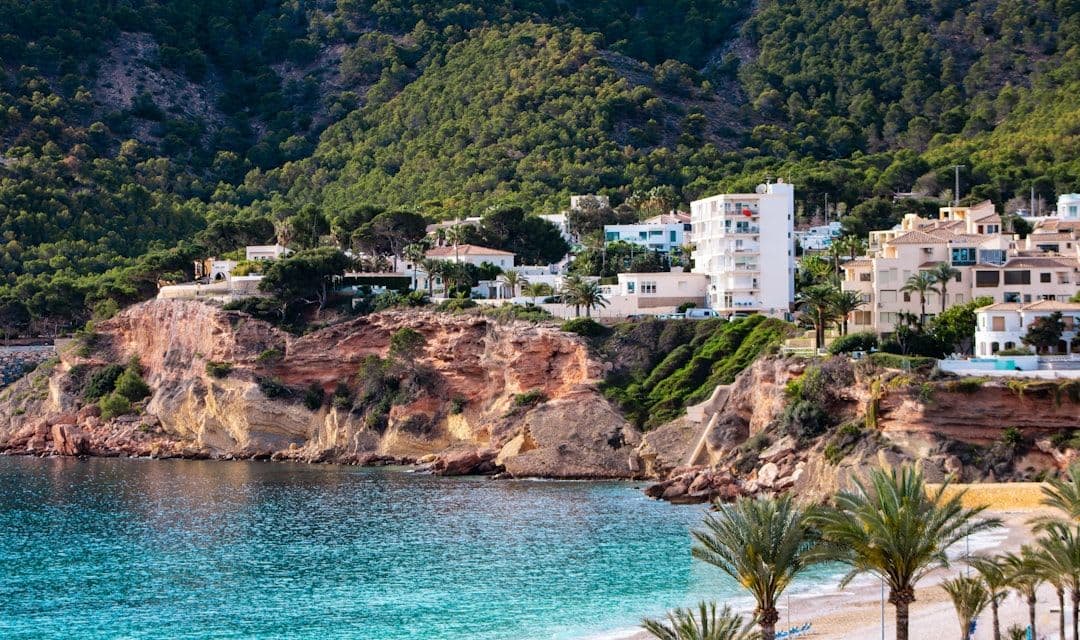
The swimmers' route follows the most scenic stretch of coast in the whole municipality. After leaving Postiguet, the peloton swims past the Almadraba coves, where the rocky bottom yields turquoise tones even on grey days. Then it rounds Cabo de las Huertas, the northern tip of the bay, with its low cliffs, the lighthouse, and the small wild coves only accessible by sea: Cantalar, Palmera, Cantal Roig. It finishes at San Juan Beach, five kilometres of fine sand where the water turns transparent as soon as you swim a few strokes from the shore.
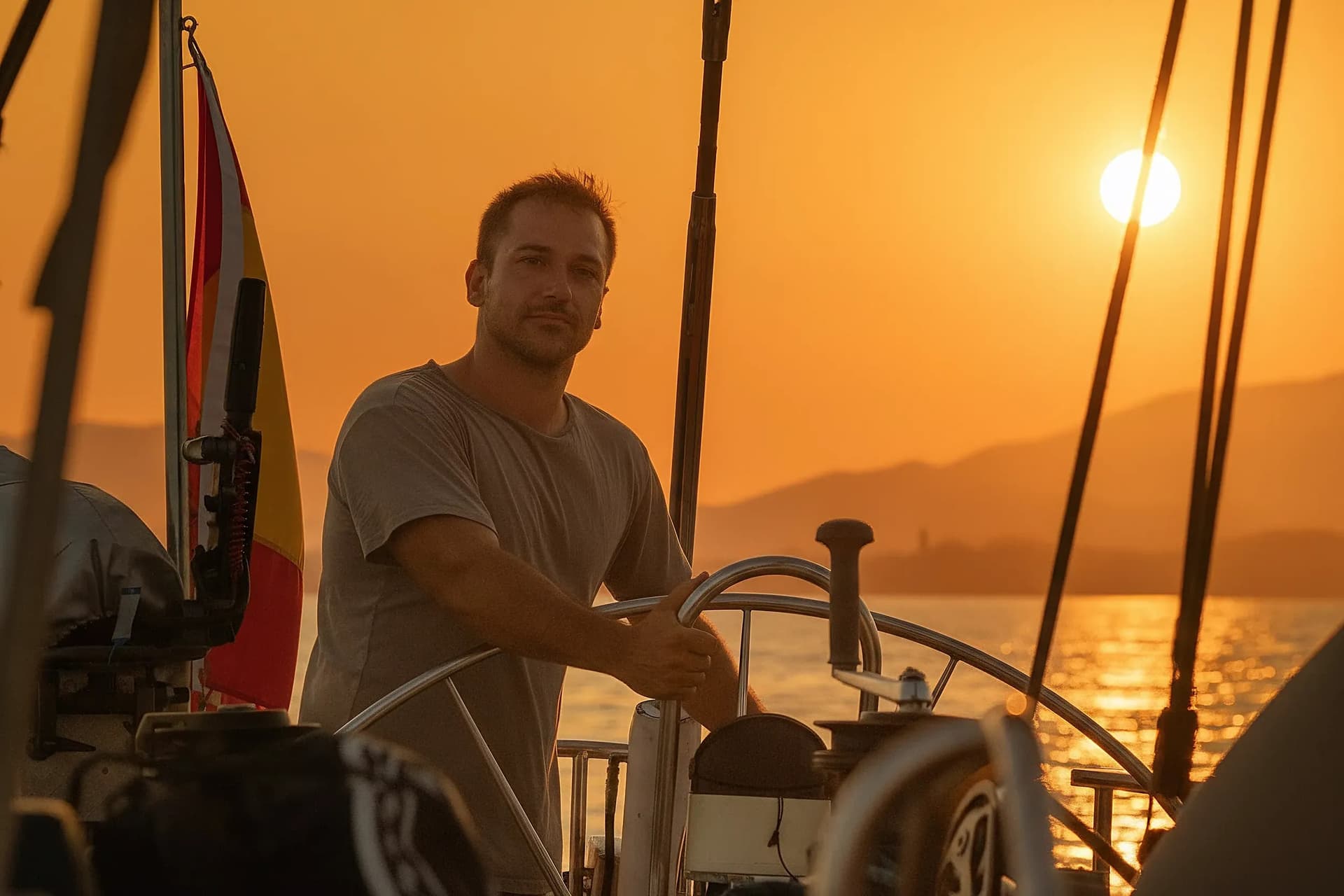
For those of us who share the coast with visitors, it is almost the ideal itinerary: three different atmospheres in barely an hour and a half under sail. This is exactly the route we follow aboard our sailboat Peggy on morning outings, with a swimming stop near Cabo Huertas and a slow return hugging San Juan.
Alicante in spring: a non-stop nautical calendar
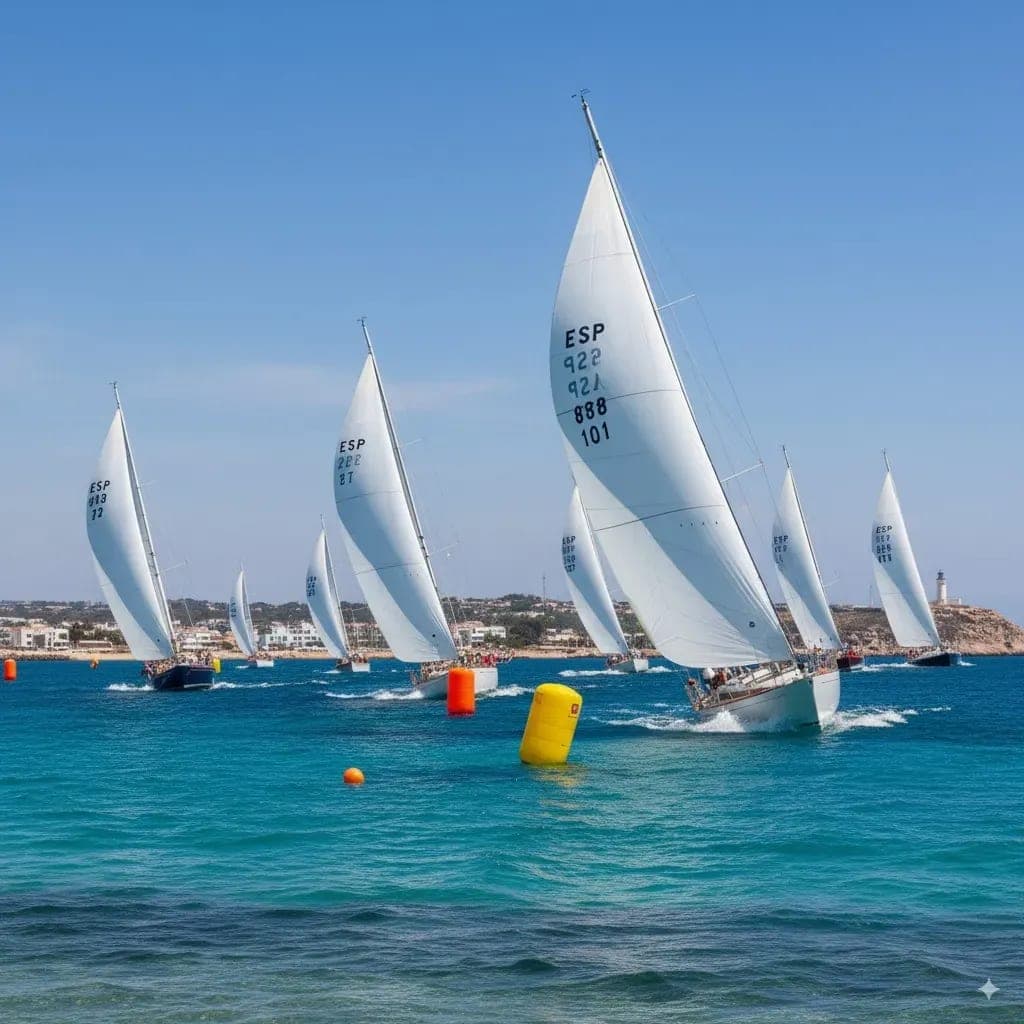
The Santa Faz Solidarity Swim joins a packed calendar of events that confirms Alicante as the nautical capital of the Mediterranean in spring. In April alone, the city hosts the 24th Bahía de Alicante Trophy anchored fishing tournament, 420-class regattas, youth events and swims like this one.
For those of us who work on the sea, each of these events is a chance to share what we love most: seeing Alicante from the water. Because the city looks completely different when you watch it from a sailboat anchored off the Postiguet, with the castle above and the swimmers crossing the bay beside you.
And spring, for anyone who hasn't tried it, is probably the best time of year to sail here. Water temperatures hover around 17–18 °C — too chilly for a long swim, perfect for a wetsuit event like this — and the air stays at a comfortable 21–23 °C during the day. The afternoon thermal winds are already working reliably, the sea is clean after winter, and, above all, the coast isn't yet saturated with motorboats as it will be a month and a half later.
Experiencing the Alicante sea firsthand
If the Solidarity Swim has sparked your curiosity about this coast, you don't need to swim 9 kilometres. You can cover the exact same stretch — from Postiguet to San Juan, passing Cabo de las Huertas and its hidden coves — aboard a sailboat with a skipper.
As a related resource, a skippered coastal trip lets visitors recognise the Postiguet-Cabo de las Huertas-San Juan stretch from the water, always outside any event safety area and without interfering with swimmers, buoys or support craft.
Because in the end — whether you're swimming, rowing or sailing — what matters is the same: getting out on the sea, feeling the Mediterranean and becoming part of a community that lives facing the water.